No products in the cart.
He was tiny. Clinging. Reaching.
Punch, the little monkey from Japan, kept trying to hold on. To the caretaker. To comfort. To connect.

AI-generated image
Every time he reached out, there was hesitation. A shift. A gap. And slowly… something changed.
He didn’t cry louder.
He didn’t protest harder.
He just stopped trying.
And that’s when the internet broke.
Millions of people watched the video. Millions felt something heavy in their chest. Strangers across the world were tearing up over a baby monkey they had never met.
Why did this hurt so much? Because this wasn’t just about a monkey.
It was about separation anxiety. About the silent ache of wanting to belong. About the fear of rejection that lives quietly inside so many of us.
We weren’t reacting to an animal.
We were reacting to the very real impact of social exclusion, something our nervous system understands long before our mind does.
Here, we’ll explore what psychology reveals about rejection, how attachment theory shapes our emotional world, why abandonment wounds run deeper than we admit, and what happens inside us when we stop trying.
Because Punch wasn’t just reaching for comfort.
He was reaching for safety.
And by the end of this piece, you may begin to see that this story was never about him alone.
It was about us.
The Story Behind the Viral Video of Punch the Monkey
For those who missed the story: Punch is a baby Japanese macaque who was abandoned by his mother at birth at the Ichikawa City Zoo in Japan.
In primates, early maternal bonding isn’t just emotional, it’s survival.
After the abandonment, zookeepers stepped in to care for him. To soothe him, they gave him a stuffed orangutan toy. That toy soon became his constant companion, something he clung to while navigating the world around him.
As Punch grew, he was introduced to other macaques in the troop. Videos show him slowly approaching them, attempting contact, trying to belong.
Often, he was ignored. Sometimes gently pushed away.
And almost every time, he returned to his stuffed toy.
No aggression. No chaos.
Just a young macaque, already separated once, trying to find safety again, and struggling to feel it.
Why Rejection Is Never “Small”
We often say things like,
“It’s not a big deal.”
“It’s just a small thing.”
“Don’t be so sensitive.”
But psychology tells a very different story.
Research in social rejection psychology shows that when we are excluded, ignored, or pushed away, the brain activates the same neural pathways as physical pain. Yes, the brain processes social exclusion almost like an injury.
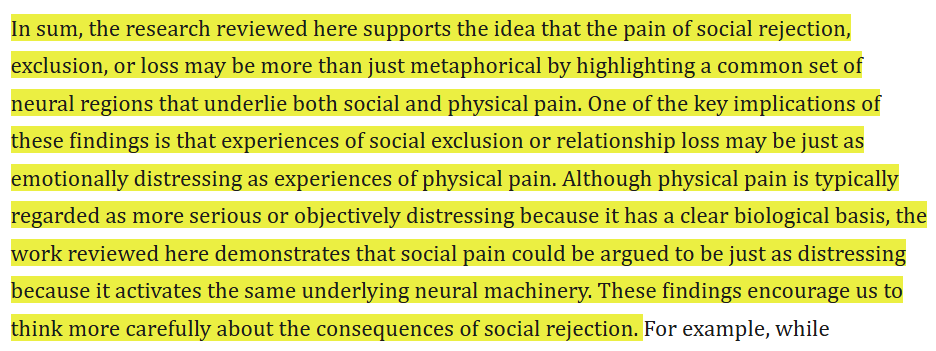
Source: Eisenberger NI. The neural bases of social pain: evidence for shared representations with physical pain. Psychosom Med. 2012 Feb-Mar;74(2):126-35. doi: 10.1097/PSY.0b013e3182464dd1. Epub 2012 Jan 27. PMID: 22286852; PMCID: PMC3273616.
Rejection is not dramatic. It is neurological.
- Being left out of a group.
- Not being invited.
- Speaking in a meeting and being ignored.
- Watching others connect while you stand slightly outside the circle.
These moments may look small on the surface. But the impact of social exclusion runs deep because our wiring is built for connection.
Your nervous system doesn’t pause and say, “Oh, this is just social.” It reacts.
From an evolutionary lens, exclusion once meant danger. Survival depended on belonging. That’s why the fear of rejection is so powerful, and why nervous system regulation becomes difficult when we feel pushed out.
This is not a weakness. It is biology.
Attachment Theory: Why Punch’s Pain Felt So Familiar
To understand why this story hit so deeply, we need to understand something called attachment theory.
In simple words, we are wired to bond.
Humans. Primates. Babies. We are not designed to survive alone.
For a child, safety doesn’t come from logic. It comes from connection. From being held. From being responded to. From knowing, “When I reach out, someone will reach back.”
Safety equals connection.
This is where childhood attachment patterns begin.
- When caregiving is consistent, warm, and predictable, a child develops an internal sense of safety.
- They learn: The world is safe. People are safe. I am safe.
- But when caregiving is inconsistent, or when there is separation or abandonment, something shifts. The nervous system stays alert.
The child may grow up feeling anxious in relationships… or emotionally withdrawn.
According to attachment theory, repeated experiences of abandonment don’t just hurt in the moment. They shape how we relate to the world.
Some of us respond by clinging harder.
- Seeking reassurance. Over-explaining. Over-giving.
Others respond by shutting down.
- Stopping the reach. Pretending we don’t need anyone.
Both are attempts at emotional regulation. Both are rooted in abandonment wounds.
Punch kept reaching. Until he didn’t.
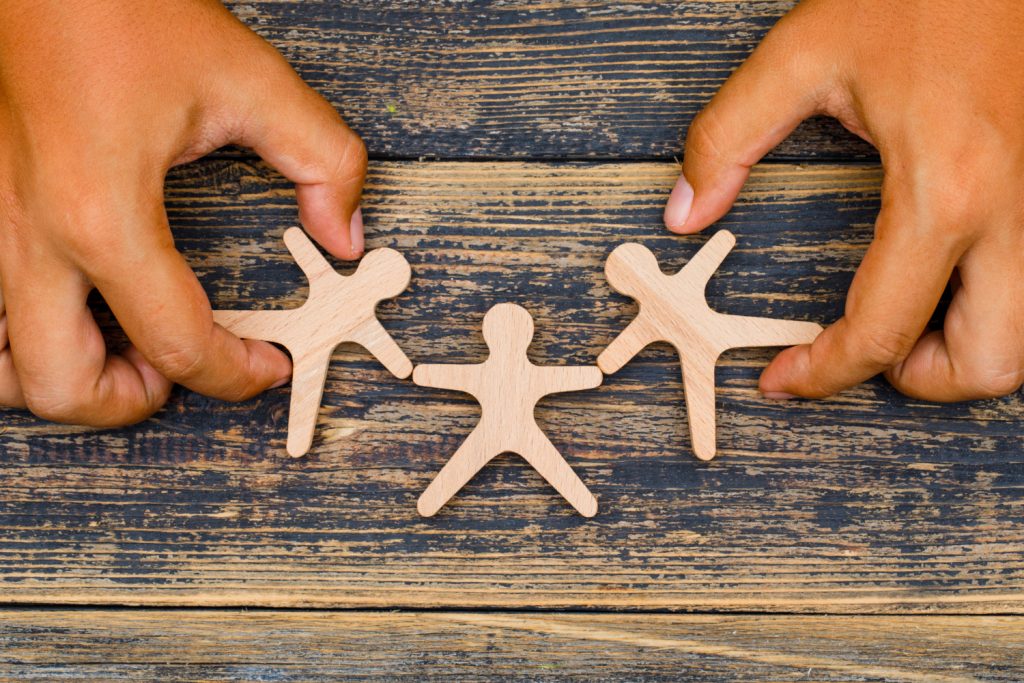
Image Credits: Freepik
When Trying Stops: Learned Helplessness
There’s another psychological concept that helps explain what we witnessed — learned helplessness psychology.
It’s simple.
When someone tries… and tries… and tries again, and the outcome never changes, the brain starts conserving energy.
It quietly concludes: “This doesn’t work.”
Over time, effort feels pointless.
This isn’t laziness. It isn’t a weakness.
It’s protection.
When repeated rejection teaches the nervous system that reaching out only leads to pain, the system adapts. It reduces hope to reduce hurt.
People don’t stop trying because they don’t care.
They stop because hope begins to hurt more than withdrawal.
This is something we see in abandonment trauma in adults all the time.
- The partner who stops expressing needs.
- The employee who stops sharing ideas.
- The friend who slowly goes quiet.
Not because they don’t feel.
But because they’ve learned that trying changes nothing.
Punch stopped trying.
And somehow, that was the hardest part to watch.
The Subtle Ways We Recreate the Same Pain
It’s easy to feel for Punch.
It’s harder to look at ourselves.
Because exclusion doesn’t always look cruel. Sometimes it looks quiet. Polite. Civil.
- It’s the colleague we don’t invite to lunch because “they won’t vibe.”
- The introverted teammate we overlook during discussions.
- The relative who doesn’t quite fit the family mold.
- The friend who feels slightly awkward in the group.
- The person we silently judge before knowing their story.
No one shouts. No one attacks. But something is communicated.
“You’re not fully in.”
And here’s the truth: the nervous system doesn’t care about intention. It only registers a threat.
From a biological lens, belonging equals safety. When someone repeatedly feels left out, the body doesn’t interpret it as “social dynamics.” It interprets it as risk.
Over time, the impact of social exclusion builds.
- It can deepen abandonment wounds, disrupt nervous system regulation, and make emotional regulation harder in adulthood.
That’s how subtle moments become long-term patterns.
We may not mean to hurt.
But the body remembers what the mind tries to minimize.

Image Credits: Freepik
Abandonment Trauma in Adults: The Invisible Aftermath
Abandonment doesn’t always create loud adults. Sometimes, it creates impressive ones.
When early connections feel uncertain, the child learns to adapt, not consciously, but biologically.
- The brain begins scanning for signs of withdrawal.
- Tone changes.
- Delayed responses.
- Shifts in energy.
- Over time, this hyper-awareness becomes personality.
The adult may become:
- The one who over-achieves — because success feels safer than vulnerability.
- The one who over-pleases — because harmony feels safer than honesty.
- The one who over-explains — because clarity feels safer than misinterpretation.
Or the one who stops needing altogether.
Emotionally self-contained. Low-maintenance. “I’m fine.”
But beneath these patterns often lies unresolved abandonment trauma in adults, a nervous system that never fully relaxed into connection.
The hardest part?
It doesn’t always feel like pain. It feels like identity.
And when your early years disrupted your internal sense of safety, even healthy relationships can activate the old fear of rejection.
Not because love is unsafe. But because once upon a time, it was.
And the body doesn’t forget easily.
So What Do We Do? Repairing the Wound (In Ourselves and In Each Other)
If Punch’s story moved you, let it move you toward something.
Rejection impacts the brain. Early separation shapes attachment. Repeated exclusion can lead to learned helplessness. We’ve seen psychology.
Now let’s talk about repairs.
Healing begins when we consciously rebuild the foundations of emotional well-being: safety, consistency, and connection.
Here’s how that looks in real life:
1. Regulate the Body Before You Fix the Story
When you feel excluded, ignored, or rejected, your body reacts first.
Heart rate shifts. Muscles tighten. Thoughts race.
- Before analyzing the situation, regulate your physiology.
- Slow your breathing, especially the exhale.
- Relax your jaw and shoulders.
- Ground your feet into the floor.
- Step outside for natural light.
These small actions strengthen nervous system regulation, which directly improves emotional regulation. A calm body creates a clearer mind. And many relational conflicts dissolve when the nervous system is no longer in survival mode.
2. Understand Your Attachment Blueprint
We all carry childhood attachment patterns into adulthood.
- Some of us pursue connections anxiously.
- Some withdraw at the first sign of distance.
- Some oscillate between both.
Instead of judging your reactions, study them.
Ask:
- What feels most threatening, distance or closeness?
- When someone pulls away, do I panic or shut down?
Awareness reduces reactivity. It rebuilds your internal sense of safety because you are no longer unconsciously driven by old patterns.
3. Interrupt Learned Helplessness
If you’ve stopped trying in certain relationships, or in life, don’t label yourself unmotivated.
Remember what we discussed about learned helplessness. The brain gives up when effort feels futile.
- To reverse it, create small, controlled wins.
- Express one’s need calmly.
- Set one boundary respectfully.
- Reach out once more, but differently.
Hope is rebuilt through new evidence. And the nervous system updates through experience, not intention.
4. Separate Present Reality from Past Memory
Many adult reactions are amplified by stored emotional memory. A delayed reply today can activate abandonment from years ago.
Pause and ask:
“Is this situation truly unsafe, or is it familiar?”
This distinction is powerful in healing abandonment trauma in adults. It prevents projection and strengthens relational clarity.
5. Become Intentional About Inclusion
Here’s where the story expands beyond you.
We often think trauma healing is personal work. But belonging is relational.
The impact of social exclusion is cumulative, but so is inclusion.
- Invite the quieter colleague to join lunch.
- Acknowledge someone who hasn’t spoken.
- Make eye contact when someone enters a room.
- Say, “Sit with us.”
These actions may feel small. They are not.

Image Credits: Freepik
Belonging is medicine for the nervous system.
When someone feels seen, the body relaxes. When someone feels included, the brain registers safety. When someone feels chosen, attachment wounds soften.
And here’s the deeper truth:
Every act of inclusion repairs not only the other person, but you. Because the same system that reacts to rejection thrives in connection.
We cannot change every early abandonment. But we can stop reinforcing it, in ourselves and in the people around us.
And that is where real emotional maturity begins.
The Hard Question
Punch couldn’t say, “I just want to belong.”
He just stopped trying.
And that’s the part that should stay with us.
Because here’s the harder question:
- Who around us has quietly stopped reaching out?
- Who at work no longer shares ideas?
- Who in the family stopped explaining themselves?
- Who in your circle laughs, but doesn’t really lean in anymore?
When repeated exclusion meets the fear of rejection, people adapt. They protect. They withdraw.
That’s how abandonment trauma in adults often hides, not in drama, but in silence.
Someone near you may be carrying invisible abandonment wounds right now. Holding onto their own version of a comfort toy.
Did we notice?
Or did we mistake their silence for strength?
The Last Word
If you’ve seen the recent videos, you’ll notice something different about Punch.
He isn’t sitting alone anymore.
He has started finding his place. A companion. Moments of play. Small signs of trust returning.
And that changes the way we see the story.
Because it reminds us of something powerful: safety can be rebuilt. Belonging can be relearned. The nervous system can soften when the connection becomes consistent.
Punch didn’t need grand gestures. He needed steady inclusion.
And so do we.
Maybe it’s time we sit with this and reflect:
Are we becoming the kind of presence that helps someone try again?
And who around us might just be waiting for a safer space?
Disclaimer: The content provided in this blog is for educational purposes only and should not be considered as a substitute for professional medical or psychological advice. Always seek the advice of your physician or qualified healthcare provider with any questions you may have regarding any mental health concerns or conditions.
If you’re ready to strengthen the foundations of your emotional well-being, then don’t wait.
Set up a one-on-one consultation with our emotional wellness counsellors or life coaches.
Or explore our Wellness Programs to optimize your health goals.
Reach out to us at 1800 102 0253 or write to us at [email protected].