No products in the cart.
Let me begin with a simple question.
If I asked you to rate yourself today — what number would you give?
And before you answer… think.
Most of us have been conditioned to measure everything with success, appearance, relationships, productivity, even our worth. And, without even realising, we begin to live by borrowed standards. We compare, we evaluate, we judge, and somewhere along the way, we drift away from ourselves.
But you were never meant to be a number.
You were never meant to be a scorecard.
You were never meant to live as a performance.
You are a living, breathing human system; complex, intelligent, and deeply valuable beyond measurement.
Real self-love does not begin when life becomes perfect. It begins the day you stop measuring yourself and start meeting yourself with honesty, compassion, and acceptance.
Many people believe self-love means giving endlessly or being available, accommodating, or self-sacrificing, hoping that love from others will fill what feels missing within. Somewhere along the way, even loneliness has been commercialised, and validation reduced to numbers, reactions, and fleeting attention.
But have you ever pondered, if you do not feel safe within yourself, will love from the outside ever truly feel enough?
When Love Feels Unsafe, The Body Feels It Too
We’ve been taught that love is about chemistry, intensity, sacrifice, and ‘making it work.’
That love must be passionate, consuming, and sometimes even painful.
But your biology sees love very differently.
Your nervous system does not understand romance.
It understands safety.
Beneath everything you experience, your body is constantly asking one question:
Am I safe, or am I under threat?
When emotional safety is missing, even inside a relationship, the body does not interpret it as ‘complicated love.’ It interprets it as stress.
We have seen this in countless individuals we’ve worked with, where the absence of emotional safety within a marriage slowly begins to reflect in the body. And when stress becomes constant, the body shifts into survival mode.

Image Credits: Freepik
What often starts as emotional strain quietly turns into chronic fatigue, poor sleep, digestive disturbances, hormonal imbalance, lowered immunity, and persistent inflammation. The body may not speak in words, but it always communicates through symptoms.
Over time, when the nervous system remains in a prolonged state of emotional stress, the body moves further away from repair and deeper into survival. And this is why emotional wellbeing is not separate from physical health; the two are biologically connected.
Love that feels unsafe does not only hurt the heart.
It dysregulates the body.
Healing relationships are not just about affection, attraction, or attachment. They are about regulation, calming your nervous system, creating emotional safety, lowering inflammation, and allowing your body to repair and restore.
If your relationship constantly keeps your nervous system on edge, no supplement, no perfect food plan, no routine can fully compensate for that internal stress.
The Silent Patterns That Keep You Stuck
You may be unknowingly stuck if:
- You constantly self-criticise
- You feel guilty resting
- You suppress emotions to keep peace
- You seek validation instead of safety
- You replay problems instead of building solutions
- You feel undeserving of better
Self-Love Is Not Indulgence. It is Physiology.
Many people misunderstand self-love. They think it is pampering, indulgence, or occasional self-care.
But real self-love is not any of it.
- It is how you speak to yourself when no one is listening.
- It is whether you allow yourself to rest without guilt.
- It is whether you keep suppressing emotions to keep peace.
- It is whether you constantly criticise yourself.
- It is whether you believe you deserve calm, health, and balance.
When self-criticism, people-pleasing, emotional suppression, and neglect of your own needs become patterns, the body remains locked in chronic stress.
And again, the body cannot heal when it feels emotionally unsafe.
Imagine your body is a home.
If alarms keep ringing, doors keep slamming, and danger feels constant — will repair work ever begin?
No.
The body behaves the same way.
Healing begins only when the alarm system switches off.
Self-love is not decoration.
Self-love is turning off the alarm.
Self-love is not temporary escape, not spa days, not distractions, not gifts.
Self-love is creating internal safety, a state where your body finally feels calm enough to repair, rebalance, and begin healing from within.
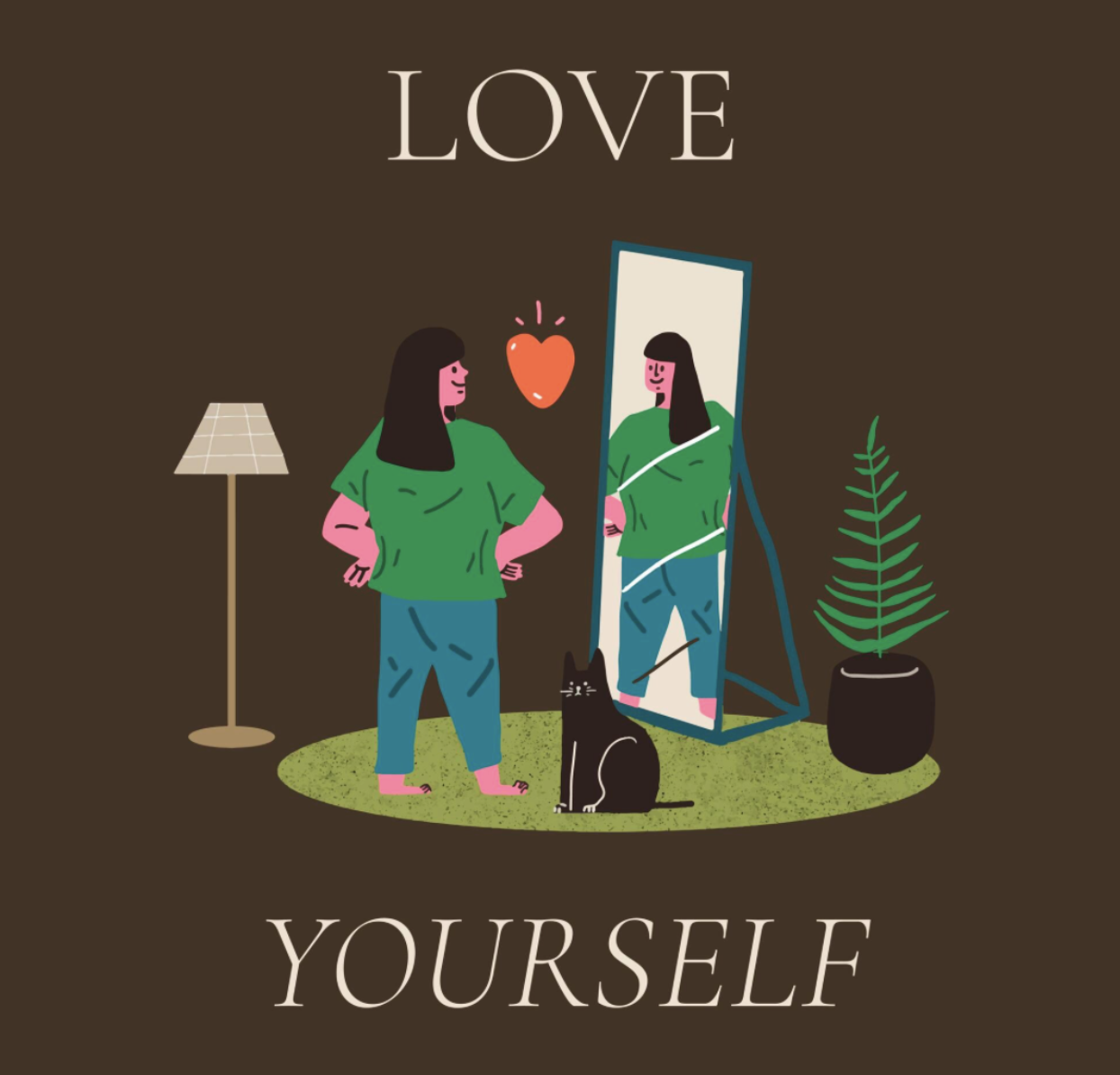
Image Credits: Freepik
If you feel ready to understand yourself more, you may explore our course Discovering Your Worth: A Guide to Enhancing Self-Esteem for a Fulfilling Life that is created to help you reconnect with your value, rebuild self-belief, and move forward with clarity and inner steadiness.
Reflect, and Ask Yourself
Before we try to change anything outside, we must first listen within.
Sit with these questions, not to judge yourself, but to understand yourself and answer with full honesty. You can even write the reasons:
- Do I feel emotionally safe in my daily life?
- Does my body feel relaxed, or constantly tense?
- Do I criticise myself more than I support myself?
- Am I suppressing emotions to avoid discomfort?
- Do I feel deserving of peace, health, and love?
- When stressed, do I pause or push harder?
- Does my relationship calm my nervous system or activate it?
- Do I listen when my body signals fatigue, hunger, or overwhelm?
- Do I allow myself to rest without guilt?
- Am I rehearsing the same problems, or moving toward solutions?
Awareness is always the first shift toward healing. When you begin to notice, you begin to change consciously.

Image Credits: Freepik
Sometimes, this reflection brings up emotions we have carried quietly for years, like hurt, resentment, guilt, or self-blame.
Healing often begins where honesty meets compassion. If you feel ready to work on releasing emotional weight and rebuilding inner freedom, you may explore Luke’s Guide to Forgiveness for Teens and Adults, a space created to help you understand, process, and move forward at your own pace.
From Victim Mode to Personal Responsibility
Life can bring situations we did not choose, like illness, heartbreak, emotional pain, loss, uncertainty. Feeling hurt, confused, or overwhelmed is human.
But healing begins the moment we shift from: “Why did this happen to me?” to “What can I do now?”
When perception changes, physiology begins to change. When the mind sees even a small possibility, the body slowly moves from resistance toward cooperation. From survival toward repair.
Acceptance and Forgiveness — For Yourself
Self-love is incomplete without acceptance, not as surrender, but as honesty. Acceptance is the strength to stop fighting your past, your mistakes, your imperfections, and your humanity. It is the moment you pause and say, without resistance or judgment, this is part of my story, but it is not the end of me.
Acceptance does not mean you approve of what hurts you. It means you stop punishing yourself for what you did not know, for what you could not control, and for the ways you were simply trying to survive.
Image Credits: Freepik
Then comes forgiveness. Especially self-forgiveness. Letting go of the harsh inner voice, the replay of guilt, the silent self-criticism that keeps the body in a constant state of tension. When you forgive yourself, you create internal safety. And when the body feels safe, it begins to regulate, to settle, to restore.
The Foundations of Real Self-Love
Instead of searching for complicated answers, come back to the foundations; the small, consistent practices that bring your nervous system out of survival and back into balance.
1. Breath — Your Fastest Reset
Your breath is the bridge between your mind and body. When you are stressed, breathing becomes shallow and fast, keeping you in a constant state of alert. Slow, conscious breathing signals safety to your nervous system and shifts your body toward repair, digestion, and emotional steadiness.
Try this simple rhythm:
- Inhale for 4 seconds.
- Exhale slowly for 6–8 seconds.
- Practice for 5 minutes, twice a day.
Over time, your body learns calm as a habit, not an effort.
2. Sleep — Real Repair Happens Here
Sleep is not just rest; it is deep biological recovery. During deep and restorative sleep, your body regulates hormones, repairs tissues, balances mood chemicals, and strengthens immunity. Poor sleep, on the other hand, keeps the body in subtle stress even if everything else looks ‘fine.’
Start gently:
- Maintain a consistent sleep and wake time.
- Reduce stimulation and dim lights before bed.
- Allow darkness to naturally stimulate melatonin.
- Create a simple pre-sleep ritual, like reading, journaling, soft breathing, so your body learns when to switch off.
3. Movement — Releasing Stored Stress
Movement is one of the most natural ways to regulate emotions and release accumulated tension. You do not need intensity; you need consistency. When you move, stress hormones reduce, circulation improves, and your body shifts from stagnation to flow.
- Walk in fresh air
- Stretch gently
- Dance
- Practice yoga
- Strength train if you enjoy it
Even 20 minutes a day can reset your physiology more than you realise.
The goal is simple: move in a way that makes your body feel alive, not exhausted.
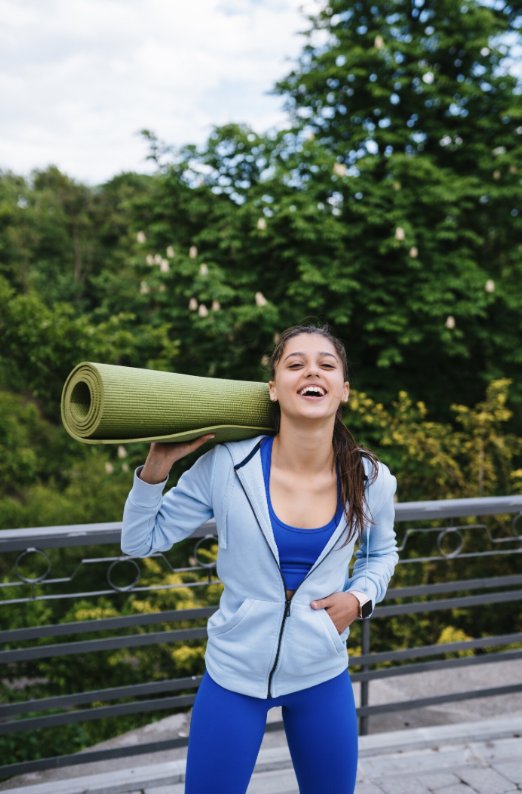
Image Credits: Freepik
4. Nutrition — Supporting, Not Straining
Food is not just fuel; it is information for your body. Instead of fear, guilt, or rigid control, bring awareness to your choices. Notice how your body feels after you eat heavy or energised, calm or inflamed.
Ask before meals: “Is this helping my body feel safe and supported?”
You do not need perfection.
You can start to:
- Begin your day with hydration (plain water) to awaken metabolism and digestion
- Include natural, whole foods as often as possible
- Balance your meals with fibre, protein, and healthy fats to stabilise energy and mood
- Eat slowly and mindfully; your nervous system digests better in calm, not in rush
- Avoid long gaps that push the body into stress and cravings
- Reduce ultra-processed foods gradually, without guilt or extremes
- Support gut health with simple additions like fresh vegetables, seasonal fruits, and adequate hydration
Notice how caffeine, sugar, and late heavy meals affect your sleep and energy and when you make an ‘imperfect’ choice, add something nourishing rather than criticising yourself.
5. Emotional Release — Creating Space Within
Unexpressed emotions do not disappear; they remain stored in the body as tension, fatigue, and internal noise. Emotional release is not about reacting, it is about allowing yourself to feel without suppression.
- Write what you cannot say.
- Speak to someone who listens without judgment.
- Sit quietly and acknowledge what you feel.
6. Visualization — Training the Body to Feel Safe
Visualization is the practice of mentally creating an experience before it happens, allowing your mind and body to feel a state of calm, strength, and balance from within. It is not imagination for escape; it is rehearsal for regulation.
You can try to:
- Close your eyes for a moment.
- Imagine yourself calm, steady, and at ease.
- See your body lighter, your mind clearer, your breath slower.
- Now feel it, the quiet, grounded emotion of that state.
Because your nervous system responds not only to what is happening outside, but to what feels real within. When your body experiences calm, even briefly, it begins to remember that safety is possible. And sometimes, that is where real change begins.
Image Credits: Freepik
A Gentle Reminder
You do not need to become someone else. You only need to return to yourself.
This Valentine’s Day, choose differently:
- Choose peace over pressure.
- Choose rest over proving.
- Choose compassion over criticism.
- Choose safety over intensity.
Because real love, the kind that restores, steadies, and heals, begins within you.
People may walk with you. Some may walk beside you. They may support you, love you, and hold space for you. But no one can walk for you.
Your healing, your peace, your return to yourself, that is a journey only you can take. And perhaps, today is a beautiful place to begin.
If this resonated with you, then you can watch:
Disclaimer: The information shared in this blog is intended for educational and awareness purposes only. It is NOT a substitute for professional medical advice, diagnosis, or personalized care. Every individual is unique, and your body, health history, and lifestyle require an approach tailored specifically to you. If you have an existing medical condition, are on medication, pregnant, nursing, or experiencing persistent physical or emotional symptoms, please consult your healthcare professional before making any changes to your food plans, lifestyle, or wellness routine.
Ready to make your emotional health a priority?
Check out our Emotional Wellness Program.
Looking for personalized advice?
Book a one-on-one with our team or call: 1800 102 0253 or write to us at [email protected].