No products in the cart.
Why your blood sugar is spiking – even when you haven’t eaten a thing.
We want you to picture something. You wake up in the morning. You haven’t eaten since last night. You haven’t had a single sip of juice, not even a biscuit. Yet your fasting blood sugar report comes back high. Your doctor is puzzled. You are panicking. Everyone starts blaming rice, rotis, fruit – your entire plate.
But what if food wasn’t the villain here? What if the real culprit was something far more invisible, something most doctors don’t routinely test for and most health influencers never explain properly?
What if it was cortisol?
Your blood sugar can spike from a stressful meeting, an argument with a family member, or a sleepless night with zero food involved. This is not a theory. This is biochemistry.
We’ve been saying this for years in our practice, in conversations with leading doctors, and in our programs. And today, the research is finally loud enough that we can’t afford to stay silent. India with 90 million diabetics and counting desperately needs to hear this.
India’s Diabetes Crisis: We’re Missing the Real Root Cause
According to the IDF Diabetes Atlas, 11th Edition (2025), an estimated 89.8 million Indian adults were living with diabetes in 2024 that’s one in seven adults. Projections suggest this could cross 134 million by 2045 if nothing changes.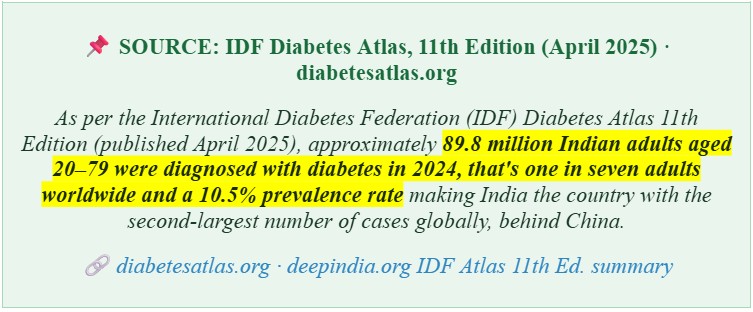 Here’s what makes India’s situation uniquely dangerous: We are genetically predisposed to store more abdominal fat, which already puts us at metabolic risk. Layer on top of that our modern lifestyle, desk jobs, endless deadlines, disrupted sleep, processed foods, zero movement and you have a perfect storm.But even within all of this, one factor keeps getting overlooked in the consultation room and the wellness conversation: chronic stress and the cortisol it produces. In a recent conversation with Dr. David Chandy, Director of Endocrinology at HN Reliance on The Luke Coutinho Show, shared something that stayed with our entire team: India’s diabetes crisis is driven more by lifestyle than genetics. That means most of it is reversible, but only if we address ALL the root causes, including stress hormones. We strongly encourage you to watch that episode.
What Cortisol Actually Does to Your Blood Sugar
Let us explain this simply, because once you understand this, you’ll never look at stress the same way again.Cortisol is your primary stress hormone, produced by the adrenal glands in response to any perceived threat, whether that’s a tiger chasing you in the jungle or a WhatsApp message from your boss at 11 PM. Your body does not distinguish between the two. Stress is stress.
Here is the sequence of events:
Stress Trigger
(Work pressure, emotional stress, lack of sleep)
↓
Brain Activates the HPA Axis
(Hypothalamus → Pituitary → Adrenal glands)
↓
Cortisol is Released
(The body’s main stress hormone)
↓
Liver Releases Glucose + Insulin Reduces
(Preparing the body for fight or flight)
↓
Blood Sugar Rises
(Even if you haven’t eaten)
Chronic stress = this cycle keeps repeating
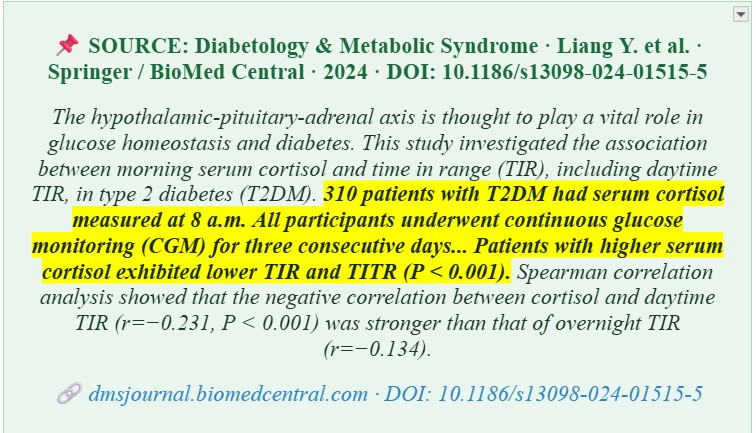
A 2024 study in Diabetology & Metabolic Syndrome confirmed that morning serum cortisol was an independent predictor of blood sugar time-in-range for diabetic patients.
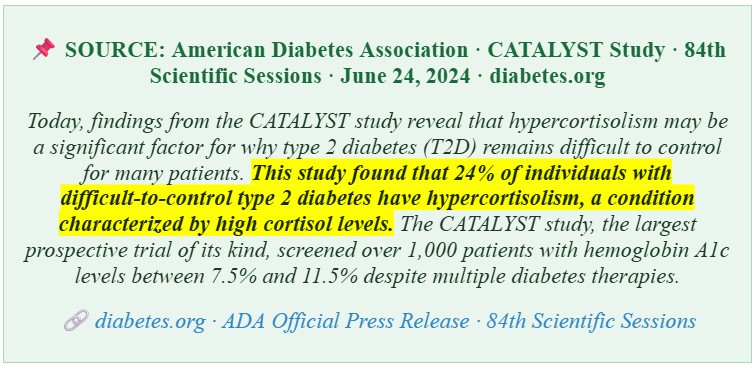
 Perhaps most alarming: A 2024 CATALYST study found that nearly 24% of people who could not manage their blood sugar with medication had hidden excess cortisol, a condition called hypercortisolism that was never diagnosed or addressed. Their blood sugar wasn’t out of control because of food. It was out of control because of stress hormones.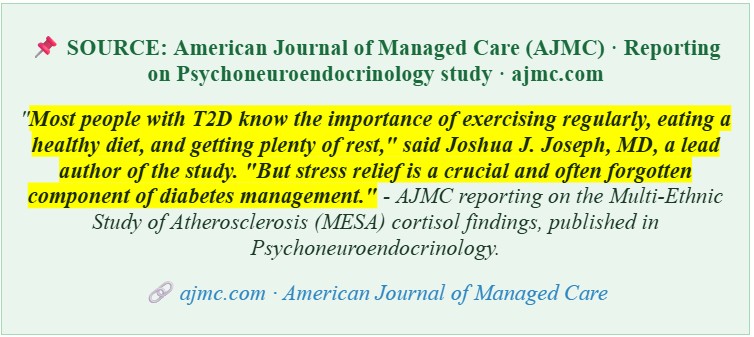
We Need to Talk About Indian Stress Differently
Our culture carries a very specific brand of stress. Financial pressure. Family expectations. Career competition. Societal judgment. The pressure to perform in school, at work, in marriage, as parents. Most of us have never been taught to process emotion. We were told to push through, stay strong, don’t complain.And biologically, our bodies are paying a price.India’s ICMR–INDIAB data shows that Indians derive 65–75% of their daily calories from carbohydrates, already a metabolic challenge. But on top of that, add the stress cortisol load of a 12-hour workday, a long commute, family conflict, financial anxiety, and poor sleep and you have a combination that the body simply cannot manage without intervention.The intervention is not always a drug. It is a rebuilt life.
The Lifestyle Pillars That Actually Address Cortisol
We’re not going to give you a list of supplements or a 7-day ‘detox.’ That’s not foundational medicine. What we’re going to give you is what actually works — the same things that Dr. Chandy and our team and thousands of practitioners rooted in integrative medicine have seen transform metabolic health, including blood sugar, in real people.
1. Fix Your Sleep First
Deep, restorative sleep is when your cortisol naturally drops, your cells repair, and your insulin sensitivity resets. Without it, nothing else works optimally. No supplement, no drug, no diet hack can compensate for chronic sleep deprivation. Aim for 7 to 9 hours of quality sleep. Sleep in complete darkness. Switch off screens an hour before bed. Make your bedroom a sanctuary.
2. Eat in Rhythm, Not Just in Moderation
Our ancestors ate with the sun. Their bodies knew when food was coming. Today, we eat at random hours, spike insulin at midnight, skip breakfast, and wonder why our metabolism is confused. Timed meals matter. Eat within a consistent window. Finish dinner 3 hours before sleep. Follow what Dr. Chandy shared with us on the podcast about ancestral eating: colorful plates, half vegetables and fruit, a quarter protein, a quarter whole grains. Avoid anything that comes in plastic-wrapped packaging.
3. Move – But Not in a Punishing Way
The gentle practice of Shatapadi, 100 steps after a meal is ancient wisdom backed by modern science. A short walk after eating significantly blunts the post-meal glucose spike, aids digestion, reduces cortisol, and supports sleep. You don’t need a gym membership. You need consistent, gentle movement throughout your day like 10 minute post meal walks, sitting in vajrasana and so on.
4. Make Stress Management Non-Negotiable
This is the one most people deprioritize. They’ll take a pill, cut out bread, track their CGM obsessively, but they won’t sit still for five minutes of deep breathing. CGM data including data that Dr. Chandy walked our team through the podcast consistently showing blood sugar dropping measurably during deep breathing and relaxation practices. This is not anecdotal. This is measurable, real-time physiology.And the research backs this up. A 2024 study from University Hospital Heidelberg published in Frontiers in Public Health found that patients with Type 2 diabetes had higher cortisol levels than non-diabetic controls, and that diabetes-related distress was directly linked to worse glycemic control and higher insulin resistance.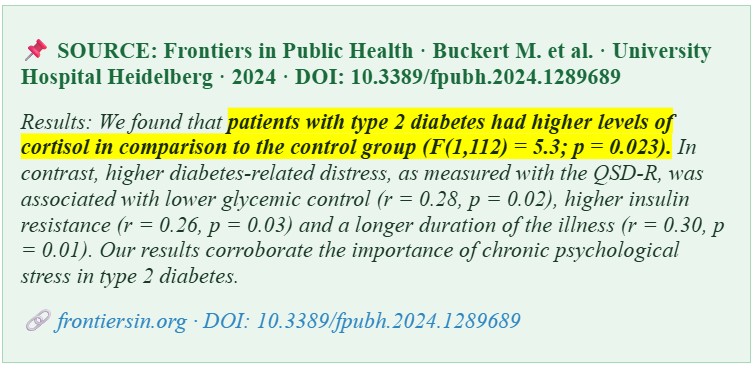 Start with Small Actions Today
- Box breathing (4 counts in – 4 hold – 4 out – 4 hold): activates the parasympathetic nervous system and lowers cortisol.
- Move from sympathetic to parasympathetic mode. Cyclic sighting (double inhale through nose, long exhale): proven to lower stress markers in as little as 5 minutes daily.
- Meditation or stillness: not a luxury, a metabolic intervention
- Letting go of grudges, processing emotions, seeking support: these are not soft concepts, they are biochemical necessities.
5. Medications Are Crutches, Not Solutions
Ozempic, Mounjaro, and other GLP-1 medications have their place. Metformin has its place. But drugs support reversal; lifestyle rebuilds health. A person who takes medication but continues to sleep five hours, skip breakfast, eat at midnight, and live under chronic work stress is not going to achieve the metabolic transformation they’re looking for. Medication is the scaffolding. Lifestyle is the building.Your blood sugar is not just a food problem. It is a sleep problem, a stress problem, a rhythm problem, and an emotional health problem.The next time your blood sugar is high and you’re wondering why before you blame the banana or the dal rice, ask yourself:
- Did I sleep well last night?
- Was I in a stressful situation before I tested?
- Am I carrying unresolved worry, anger, or anxiety?
- Have I been eating late at night?
- Am I sedentary for most of the day?
- Have I taken 10 minutes today to simply breathe?
These are not philosophical questions. These are metabolic questions. And the answers will tell you more about your blood sugar than your food diary alone ever will.The body is intelligent. It is always communicating. Cortisol spiking your blood sugar is not a malfunction, it is your body screaming that the way you are living is not sustainable.Listen. Adjust. Rebuild. That is Foundational Medicine.
Start your journey with one positive action today
Check Out Our Wellness Program
Looking for personalized advice? Our experts are ready to help you thrive. Reach Out to Team Luke’s Integrative Health Coaches!
Book a one-on-one with our team: 1800 102 0253 or write to us at [email protected].
Disclaimer: This content is for educational purposes only and is not medical advice. Always consult your healthcare provider before making any changes to your diet, lifestyle, or medications, especially if you have an existing health condition.