No products in the cart.
Be honest—how many of you sleep with your phone beside you, under your pillow, or maybe propped up just inches from your head?
It’s your alarm clock, your last scroll before bed, maybe even your source of comfort when you can’t sleep.
Image Credits: Freepik
In today’s hyperconnected world, our phones have almost become an extension of our bodies. But have you ever paused to ask yourself—what’s the cost of keeping it that close for hours every night?
We often talk about nutrition, exercise, and sleep hygiene. But few conversations touch on something most of us do unconsciously every single day—carrying, holding, and sleeping next to a device that constantly emits radiofrequency radiation.
Now, before you panic or rush to throw your phone across the room, let’s pause. This conversation isn’t about fear—it’s about awareness.
The truth is—like many areas in health—this isn’t a black-and-white topic. There’s growing curiosity, some caution from scientists, and a lot of misinformation. As a team who has has spent years helping people build conscious relationships with technology and lifestyle, we want to help you understand this better—from a science-backed, holistic perspective.
Here, we’ll decode:
- What “cell phone radiation” really is?
- The cell phone radiation effects on the human body
- How it may affect your sleep and mental well-being
- And most importantly, how you can use your phone smartly without compromising your health
At the end of the day, technology is meant to serve your well-being, not steal it.
Understanding Cell Phone Radiation
Let’s start by simplifying what cell phone radiation really means.
Every time you make a call, stream a video, or scroll through social media, your phone is constantly sending and receiving signals using radiofrequency electromagnetic fields (RF-EMFs).
- This energy is a type of non-ionizing radiation, which means, unlike X-rays or gamma rays (known as ionising radiation), it doesn’t have enough power to damage your DNA directly or knock electrons off your cells.
But here’s the key point: just because it’s non-ionizing doesn’t mean it has zero biological effect.
Think of it this way — the warmth you feel when you keep your phone to your ear for a long call?
- That’s your body absorbing some of this radiofrequency energy. Scientists call this measure the Specific Absorption Rate (SAR) — essentially, how much RF energy your tissues absorb. The closer the phone is to your body, and the longer the call, the higher the exposure.
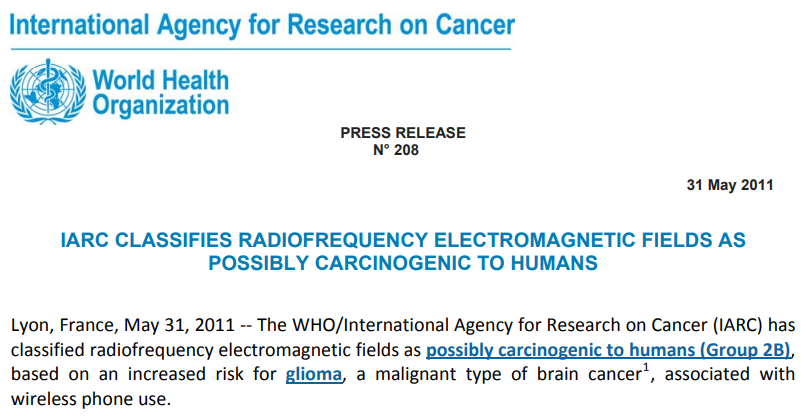
According to the World Health Organization (WHO) and the International Agency for Research on Cancer (IARC), RF-EMFs have been classified as ‘possibly carcinogenic to humans’ (Group 2B).
This classification doesn’t mean your phone will cause cancer — it simply means that there’s some evidence, though limited, suggesting a potential link that warrants caution and more research.
Now, you might wonder — “Does this mean cell phones are dangerous?”
Here’s where we need to stay balanced and practical. Current research shows that the effects of cell phone radiation on the human body are still being studied.
- Some lab studies indicate possible oxidative stress, DNA changes, or mild heating of tissues with prolonged exposure, while large human studies remain inconclusive (National Center for Biotechnology Information, 2020).
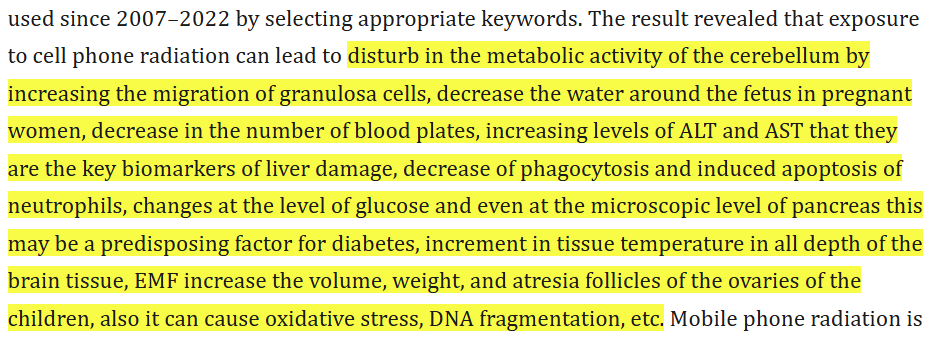
Source: Elyasi H, Ghanbari M, Nadri F. Investigation of the Adverse Health Effects of Cell Phone Radiation and Propose Solutions to Minimize Them: A Systematic Review. Indian J Occup Environ Med. 2024 Jan-Mar;28(1):18-22. doi: 10.4103/ijoem.ijoem_89_23. Epub 2024 Apr 10. PMID: 38783888; PMCID: PMC11111148.
So while your phone doesn’t emit the same kind of harmful radiation as nuclear energy, it’s still energy, and your body absorbs it. The closer your phone is to vital organs—especially during sleep—the higher the potential effect.
That’s why we always say, it’s not about fear, it’s about awareness. We can’t (and shouldn’t) run away from technology, but we can absolutely learn to use it more mindfully.
If you’ve read our recent blog where we spoke about Bluetooth devices and wireless earphones, we mentioned something very similar — technology isn’t bad, but constant, close exposure without mindful breaks is. Just as you take screen breaks for your eyes, you can take “radiation breaks” for your body.
So, before you shrug it off as ‘harmless,’ remember this:
The cell phone radiation effect might not be visible right now — but the body is always absorbing, adapting, and responding to its environment. The question is — are you giving it the space to recover?
Effects of Cell Phone Radiation on the Human Body
Let’s look at what science really says about the cell phone radiation effect on the body.
Whenever your phone connects to a network or makes calls, it emits radiofrequency electromagnetic fields (RF-EMFs). These waves are absorbed by your tissues — especially when the phone is close to your head or body. While this doesn’t cause an immediate ‘burn’ or visible effect, research shows that our cells may still respond to this energy in subtle yet important ways.
Mild Tissue Heating
One of the most common physiological responses noted is mild tissue heating, also called localized warming.
- When you hold the phone against your ear for a long call, the slight warmth you feel isn’t your imagination — it’s real.
- Prolonged RF-EMF exposure can raise local tissue temperature by a small fraction of a degree. While this isn’t enough to cause damage on its own, it’s an indicator that our bodies are indeed interacting with this energy.
Oxidative Stress and Inflammation
Beyond heat, scientists have also observed potential oxidative stress and inflammation in experimental models.
- RF-EMF exposure can increase the production of reactive oxygen species (ROS) — unstable molecules that can trigger oxidative stress and inflammation in the body’s tissues.
- Long-term exposure could alter nerve cell function and promote cellular apoptosis (natural cell death), especially in the central nervous system.
Brain and Sleep
When it comes to the brain and sleep, studies are ongoing — but the early data is worth paying attention to. We’ll discuss this in-depth.
However, in the spirit of balance, we must approach this topic with reason, not fear. Not all studies show harm.
So, where does that leave us?
As of today, the scientific consensus remains cautious but inconclusive. There’s no definitive evidence that cell phone radiation causes disease — but there’s also enough biological evidence to suggest we should be mindful of how, when, and how much we use it.
Effects of Sleeping with the Phone near Your Head
If you’ve been sleeping with your phone under your pillow, by your bedside, or within arm’s reach — this one’s for you.
Many people tell me, “I just check one last message before bed.”
But let’s be honest — that one last message often turns into 10 minutes of scrolling, a few notifications, and before you know it, you’re still awake an hour later. Your mind is buzzing, your eyes are strained, and when you finally fall asleep, it’s not the deep, restorative sleep your body truly needs.
Now, let’s break down what’s actually happening here — both biologically and behaviorally.
Proximity and RF-EMF Exposure
When your phone is close to your head, it emits radiofrequency electromagnetic fields (RF-EMFs) that the nearby tissues can absorb. The closer the device, the stronger the field interaction.
- According to several studies, these emissions may cause localized tissue absorption — particularly in the head and neck area — which is more significant in children due to their smaller skull thickness and higher tissue conductivity.
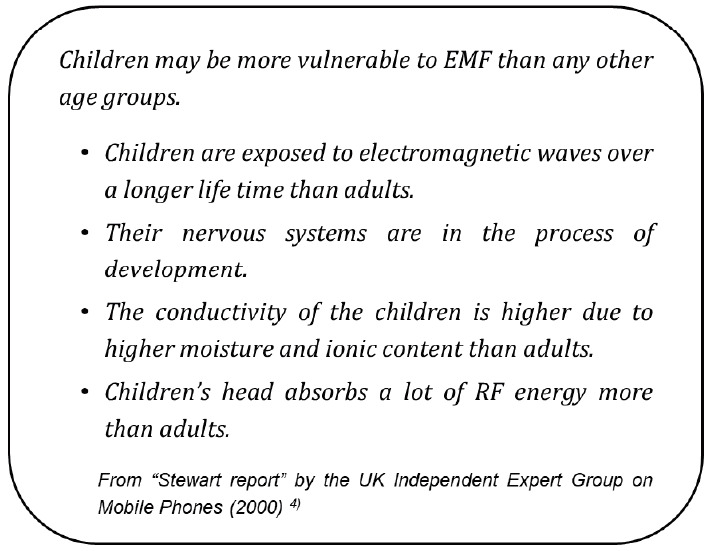
Source: Moon JH. Health effects of electromagnetic fields on children. Clin Exp Pediatr. 2020 Nov;63(11):422-428. doi: 10.3345/cep.2019.01494. Epub 2020 May 26. PMID: 32683815; PMCID: PMC7642138.
While research hasn’t conclusively shown that this causes disease, it’s still important to understand that your body isn’t ‘neutral’ to these signals. Your brain and nervous system are bioelectrical — constantly sending and receiving their own tiny signals — and these external fields may create low-level interference.
As we always say, the absence of proof is not proof of absence. Science is still evolving, but common sense says: if your phone doesn’t need to be next to your head all night, move it away.
Blue Light and the Sleep Hormone
Even before we talk about radiation, let’s talk about light — particularly blue light, which phones emit abundantly.
Blue light directly suppresses the secretion of melatonin, your sleep hormone. Melatonin isn’t just about falling asleep; it’s about maintaining your circadian rhythm, the natural 24-hour clock that regulates everything from metabolism to emotional balance.
- Exposure to blue light from electronic devices delayed sleep onset, reduced sleep quality, and suppressed melatonin production.
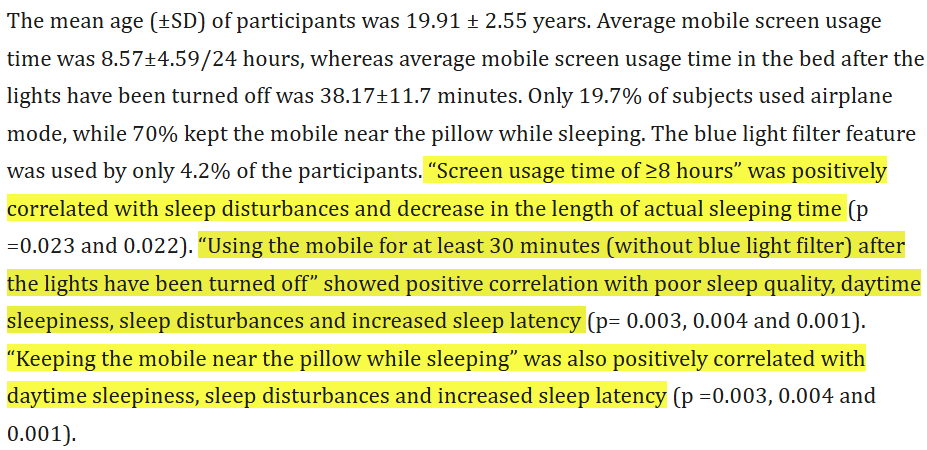
Source: Rafique N, Al-Asoom LI, et al. Effects of Mobile Use on Subjective Sleep Quality. Nat Sci Sleep. 2020 Jun 23;12:357-364. doi: 10.2147/NSS.S253375. PMID: 32607035; PMCID: PMC7320888.
So, if you’ve been struggling to fall asleep even though you’re ‘tired,’ it might not be stress alone — it could be that your body clock is confused because your screen told it that it’s still daytime.
Sleep Architecture and Electromagnetic Interference
RF-EMFs may subtly alter brainwave patterns during sleep. For example, researchers observed that mobile phone exposure before bedtime can change EEG activity (the brain’s electrical patterns) and delay REM sleep onset.
REM sleep is where emotional regulation, learning, and memory consolidation happen. So even if you don’t feel like your phone affects your sleep, your brain might be working overtime to stabilize after those late-night calls or notifications.
Dopamine, Distraction, and Emotional Rest
Let’s move beyond biology.
In one of our recent blogs, Time for a Digital Detox, Most people today wake up to pings, alerts, and messages — before they’ve even taken their first conscious breath.
- Every ping triggers dopamine, your brain’s reward chemical, which keeps you coming back for more.
- Late-night scrolling overstimulates your nervous system, increases arousal, and prevents your body from winding down. You may not realize it, but the mind never really ‘shuts off’ — it’s constantly processing, reacting, anticipating.
- You think you’re relaxing — but what you’re actually doing is feeding your stress loop.
Over time, this leads to poor focus, irritability, fatigue, and even mood fluctuations. When the body doesn’t get deep rest, emotional regulation suffers — and the simplest challenges start to feel heavier.
Concerned about long-term exposure and its impact on your health?
👉 Book a consultation for personalised, expert-led guidance.
Practical Ways to Reduce Exposure Without Fear
Let’s be clear — we’re not here to tell you to fear your phone or toss it into the ocean.
Technology connects us, helps us grow, and even saves lives. The real problem begins when our gadgets start controlling us, instead of the other way around.
When it comes to cell phone radiation effects on the human body, awareness is your best protection — not anxiety. The goal isn’t to disconnect from life, but to reconnect with balance. So here are some simple, science-backed, and mindful habits you can start right away.
Keep Your Phone Away While Sleeping
If you take just one tip from this discussion, make it this one. Avoid keeping your phone under your pillow or too close to your head.
- Instead, place it at least an arm’s length away — on a bedside table or dresser. You’ll instantly reduce exposure and, as a bonus, remove the temptation to scroll late into the night.
Switch to Airplane Mode or Turn Off Wi-Fi at Night
When you’re asleep, you don’t need to be connected to the world — you need to be connected to your rest.
- Switching your phone to airplane mode (or turning off data/Wi-Fi) reduces RF-EMF emissions drastically. This simple step can reduce potential cell phone radiation effects and improve your overall mobile phone and health balance.
Prefer Speaker Mode or Wired Earphones for Calls
Whenever possible, keep the phone away from your ear during calls.
- Use the speaker mode or wired earphones (not wireless) for longer conversations.
Remember — distance is your best defense. Even a few centimeters can make a difference.
Create a Digital Sunset Before Bed
Thirty to sixty minutes before sleep, put away your phone. Let your nervous system wind down.
- Replace screen time with stillness — read a real book, do light stretches, or try guided breathing. This isn’t just about the effects of sleeping with a phone near your head — it’s about protecting your circadian rhythm, melatonin levels, and mental peace.
Try that tonight. It’s powerful.
Don’t Keep Your Phone in Your Pocket
Many people, especially men, keep their phones in their trouser pockets all day. It’s convenient, yes — but studies suggest that prolonged close contact with active devices can increase localized absorption and potential oxidative stress.
So whenever possible, keep it on your desk, in a bag, or away from your body. Small changes, big differences.
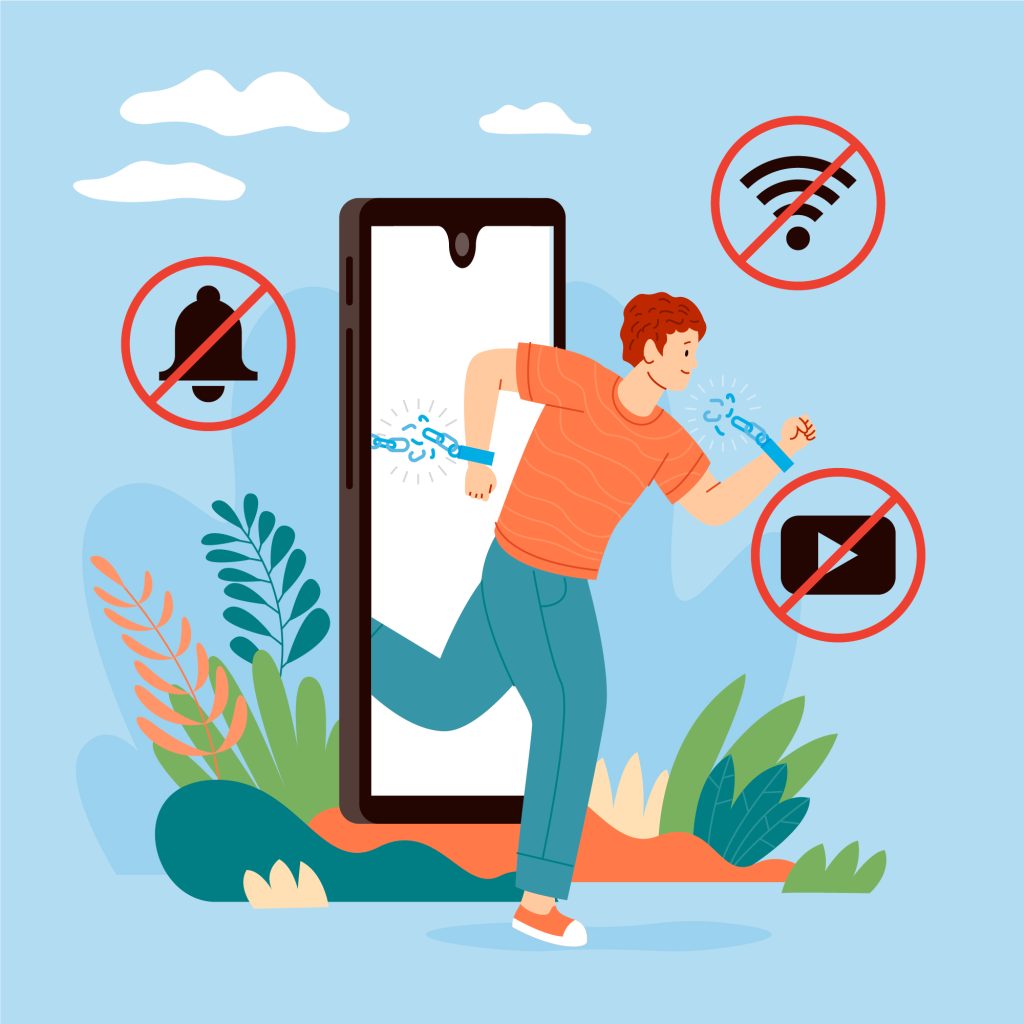
Image Credits: Freepik
The Role of Holistic Living in Reducing Tech Stress
Now, let’s zoom out.
Your phone is just one piece of the larger picture of modern stress. You can’t fully escape electromagnetic fields, but you can build resilience from within.
Here’s how you can strengthen your internal defense system — your natural shield:
Prioritize Deep, Quality Sleep
Your body’s repair, cleansing, and regeneration happen during deep sleep. It’s when your trillions of cells rejuvenate, hormones balance, and the brain cleanses.
Keeping your sleep environment device-free supports this beautiful process of healing and renewal.
Eat Anti-Inflammatory, Antioxidant-Rich Meals
If RF-EMFs may increase oxidative stress, then support your antioxidant army. Load up on:
- Fresh vegetables and berries
- Turmeric (curcumin)
- Omega-3-rich foods like flaxseeds and walnuts
- Good hydration
Your nutrition directly supports your cellular resilience — protecting you from inflammation at multiple levels.
Ground Yourself in Nature
Spend time outdoors, walk barefoot on the grass, and soak in the morning sunlight.
- Nature helps discharge built-up static energy and resets your nervous system. It’s one of the simplest ways to offset tech stress and reconnect with your natural rhythm.
Practice Mindfulness, Breathing, and Stillness
Our minds aren’t tired from doing too much — they’re tired from scrolling too much.
- As we share in our book, The Calm Prescription, sometimes the most healing thing you can do is pause. Instead of having your phone in your hand, try one of the 75 science-backed ways to calm your mind — from deep breathing and journaling to gratitude and grounding.
Every moment of stillness allows your nervous system to recharge — something no device can do for you.
Set Digital Boundaries
No one else will do this for you — you have to protect your energy.
- Set “no-phone” hours, especially during meals and right after waking up. The more intentional you become, the less your body lives in that constant “ping” mode.
You don’t need to be afraid of your phone — you just need to be aware.
The Last Word
Let’s get one thing clear — your phone isn’t your enemy. It’s a brilliant tool. It connects you to loved ones, to knowledge, to opportunities. But like every tool, how you use it determines whether it serves your wellbeing or slowly chips away at it.
Fear won’t fix anything. Awareness and action will.
As we often say, “The body doesn’t need perfection, it needs consistency.” The same goes for your digital habits. You don’t need to throw away your phone — you just need to create intelligent boundaries.
So tonight, before you go to bed, try this: put your phone away, dim the lights, take a deep breath, and listen — not to your device, but to your own body. That’s where real connection begins.
Frequently Asked Questions
Is cell phone radiation dangerous to human health?
Cell phones emit non-ionizing radiation — different from harmful X-rays — but long-term exposure may still affect the body’s balance. Research on cell phone radiation effects on the human body remains inconclusive, yet moderation matters. Mindful use, distance, and healthy habits can help protect your mobile phone and health.
What happens if you sleep with your phone near your head?
Sleeping close to your phone increases RF-EMF exposure and disrupts sleep through blue light and constant notifications. Studies link the effects of sleeping with a phone near your head to reduced melatonin and poor rest. Keep your phone at arm’s length away or on airplane mode to support deeper, healthier sleep.
Does mobile phone radiation affect brain function or memory?
Some studies suggest cell phone radiation affects brain activity — mild changes in focus, fatigue, or attention — though evidence isn’t conclusive. Still, your brain benefits from digital breaks and balanced use. Limiting screen time and taking regular pauses protects both your mobile phone and health naturally.
How can I reduce my exposure to cell phone radiation daily?
Small choices make a big difference: use speaker mode, wired earphones, and avoid keeping your phone in your pocket. At night, switch to airplane mode. These simple habits lower potential cell phone radiation effects on the human body and support a more mindful, balanced mobile phone and health routine.
Does phone radiation affect sleep quality and melatonin levels?
Yes, indirectly. Blue light and RF-EMF exposure may suppress melatonin — your sleep hormone — affecting sleep cycles. Research on cell phone radiation effects and sleep shows that late-night scrolling and proximity worsen rest quality. Keep devices away before bed to protect your rhythm, recovery, and natural balance.
Disclaimer: The information shared in this blog is intended for educational purposes and to raise awareness about potential health impacts related to cellphone use and EMF exposure. It is not a substitute for professional medical advice, diagnosis, or treatment. Always consult a qualified healthcare provider if you have concerns about your health or experience symptoms related to cellphone use or EMF exposure.
Feeling wired, fatigued, or foggy after cellphone use?
We’re here to help YOU find a way.
Set up a one-on-one consultation with our integrative team or explore our Wellness Programs to optimize your lifestyle goals.
Reach out to us at 1800 102 0253 or write to us at [email protected].