No products in the cart.
Think you might be lactose intolerant?
You’re not alone.
These days, more and more people are blaming milk for everything: bloating, acne, sinus issues, and even fatigue. One uncomfortable glass of milk, and suddenly the internet convinces you that dairy intolerance is the problem.
So the first instinct?
Cut dairy.
Avoid milk.
Switch to almond or oat milk.
And sometimes, yes, people do feel better.

Image Credits: Freepik
But here’s the question most people never ask.
Is milk actually the problem… or is it simply revealing something deeper going on in your gut?
Symptoms like bloating, skin flare-ups, or digestive discomfort often have more to do with gut health and inflammation than with dairy alone.
Interestingly, every time we suggest reducing or eliminating milk for certain patients, we often get trolled or questioned by people in the medical space.
“Milk is a complete food.”
“How can you ask people to stop dairy?”
Fair questions. But instead of arguing opinions, it’s worth understanding what’s really happening inside the body, and why milk can sometimes become a trigger in an already compromised system.
Milk Intolerance vs Dairy Intolerance: Understanding the Difference
One of the biggest confusions in the milk debate is this:People use milk intolerance, dairy intolerance, and lactose intolerance as if they all mean the same thing.They don’t.And understanding the difference matters. Reactions to dairy generally fall into three different categories. Each involves a different biological mechanism inside the body.
Lactose Intolerance
This is the most common and widely studied form of dairy intolerance.
- It happens when the small intestine produces insufficient lactase, the enzyme responsible for breaking down lactose, the natural sugar found in milk.
- When lactose isn’t properly digested, it travels to the colon, where gut bacteria ferment it.
- This fermentation produces gases and short-chain fatty acids, leading to digestive symptoms.
Common lactose intolerance symptoms include:
- Bloating
- Gas
- Abdominal cramps
- Diarrhea
- Nausea
Nearly 65% of the global adult population has a prevalence varying across ethnic groups.
Milk Intolerance
Milk intolerance is slightly different. Instead of lactose, the body reacts to milk proteins, mainly:
- Casein
- Whey
These proteins can trigger digestive discomfort or inflammatory responses in some individuals. Symptoms may include:
- Bloating
- Skin issues, such as acne
- Fatigue or brain fog
- Mucus formation
- Digestive discomfort
Unlike lactose intolerance, which is enzyme-related, milk intolerance often involves immune or inflammatory responses to proteins present in milk.These reactions may be more noticeable in individuals who already have compromised gut health or increased intestinal permeability.
Dairy Intolerance
Dairy intolerance is a broader umbrella term. It refers to difficulty tolerating dairy products in general, including:
- Milk
- Cheese
- Yogurt
- Butter
- Cream
In many cases, dairy intolerance may be linked to:
- Lactose digestion issues
- Sensitivity to milk proteins
- Gut microbiome imbalance
- Underlying gut inflammation
For example, some people who cannot tolerate milk may still tolerate fermented dairy like yogurt or buttermilk because fermentation partially breaks down lactose and proteins.
Quick Comparison
| Lactose Intolerance | The body lacks enough lactase enzymes to break down lactose (milk sugar), leading to fermentation in the gut and symptoms like gas and bloating. |
| Milk Intolerance | The body reacts to milk proteins such as casein or whey, which may trigger digestive discomfort or inflammatory responses. |
| Dairy Intolerance | A broader sensitivity to multiple dairy products, often influenced by gut health, microbiome balance, or combined lactose and protein sensitivities. |
Which brings us to an important question:If humans have consumed milk for centuries, why are so many people suddenly struggling to digest it today?
Milk Digestion Problems Often Start With Poor Gut Health
Here’s something many people overlook.Your ability to tolerate dairy isn’t just about the milk. It’s also about the condition of your gut.A healthy digestive system produces the enzymes needed to break down food and maintains a balanced gut microbiome, the trillions of microbes that support digestion, immunity, and metabolism.But when gut health is compromised, the body may struggle to digest certain foods, including dairy.This is where many milk digestion problems begin.
What Happens in the Gut When Dairy Isn’t Digested Properly?
When dairy components aren’t properly broken down, they travel further down the digestive tract, where gut bacteria ferment them.This can lead to:
- Gas production
- Bloating
- Abdominal discomfort
- Changes in bowel movements
For example:
| In lactose intolerance |
|
| In milk protein sensitivity |
|
Over time, these reactions may appear as food intolerance symptoms, making people believe dairy is the sole problem.In reality, the underlying issue may be gut imbalance.
Common Factors That Damage Gut Health
Several modern lifestyle habits can disrupt the gut microbiome and digestive efficiency. These include:
- Chronic stress
- Ultra-processed foods
- Low fiber intake
- Frequent antibiotic use
- Lack of plant diversity in the diet
- Poor sleep patterns
When these factors accumulate, the gut microbiome loses diversity, and digestive efficiency drops.The result?Foods that were once tolerated, including dairy, may start triggering symptoms.
Dairy and Inflammation: Why Some Bodies React Strongly
One reason dairy becomes controversial in health discussions is its possible link with inflammation.But the science here is nuanced.Dairy does not universally cause inflammation. In fact, in healthy individuals, many dairy products have neutral or even anti-inflammatory effects.However, the story can be different for people with existing gut dysfunction or immune sensitivity.
The Role of Milk Proteins
As discussed earlier, milk contains two major protein groups:
- Casein (about 80%)
- Whey (about 20%)
In certain individuals, these proteins can trigger immune responses.Studies suggest that fragments of casein-derived peptides may interact with immune pathways when the intestinal barrier is compromised.
- This can contribute to low-grade inflammation, especially in people with pre-existing digestive or immune conditions.

Source: Robinson SR, Greenway FL, Deth RC, Fayet-Moore F. Effects of Different Cow-Milk Beta-Caseins on the Gut-Brain Axis: A Narrative Review of Preclinical, Animal, and Human Studies. Nutr Rev. 2025 Mar 1;83(3):e1259-e1269. doi: 10.1093/nutrit/nuae099. PMID: 39024213; PMCID: PMC11819488.
In simple terms:
- When the gut lining becomes more permeable (sometimes referred to as increased intestinal permeability), larger food particles, including milk proteins, may cross the gut barrier and activate immune responses.
This is one reason why dairy may aggravate gut health and inflammation in susceptible individuals.
When Dairy Is More Likely to Trigger Inflammation
Dairy tends to cause problems mostly in people who already have:
- Gut barrier dysfunction
- Microbiome imbalance
- Chronic inflammatory conditions
- Food sensitivities
In such situations, dairy can act as a trigger that amplifies existing inflammation rather than being the original cause.
The Link Between Dairy and Acne
You’ll often hear people say, “Every time I have milk, my skin breaks out,” or “Dairy makes me feel bloated.”While this doesn’t happen to everyone, research does suggest possible biological mechanisms behind these reactions.
Researchers have studied dairy’s effect on insulin-like growth factor 1 (IGF-1).
Milk consumption can slightly increase circulating IGF-1 levels in some individuals.

Source: Romo Ventura E, Konigorski S, Rohrmann S, Schneider H, Stalla GK, Pischon T, Linseisen J, Nimptsch K. Association of dietary intake of milk and dairy products with blood concentrations of insulin-like growth factor 1 (IGF-1) in Bavarian adults. Eur J Nutr. 2020 Jun;59(4):1413-1420. doi: 10.1007/s00394-019-01994-7. Epub 2019 May 14. PMID: 31089868.
According to research, higher IGF-1 signaling has been associated with:
- Increased sebaceous gland activity
- Skin inflammation in acne-prone individuals
- Cellular growth pathways linked to metabolic signaling

Source: Kim H, Moon SY, Sohn MY, Lee WJ. Insulin-Like Growth Factor-1 Increases the Expression of Inflammatory Biomarkers and Sebum Production in Cultured Sebocytes. Ann Dermatol. 2017 Feb;29(1):20-25. doi: 10.5021/ad.2017.29.1.20. Epub 2017 Feb 3. PMID: 28223742; PMCID: PMC5318522.
This combination may increase the likelihood of acne flare-ups in people who are already susceptible.
However, it’s important to note that dairy is not the sole cause of acne. Genetics, nutrition quality, stress, and gut health also play a major role.
Dairy and Autoimmune Disease: What Research and Clinical Observations Suggest
The relationship between dairy and autoimmune disease is still an evolving area of research.Current evidence does not suggest that dairy directly causes autoimmune diseases. However, certain mechanisms may explain why some individuals with autoimmune conditions feel better when dairy intake is reduced.
The Gut-Immune Connection
Around 70% of the immune system is located in the gut, making gut health central to immune regulation.
- In individuals with increased intestinal permeability (often called “leaky gut”), partially digested food proteins may pass through the gut barrier into the bloodstream.
- When this happens, the immune system may recognize these proteins as foreign and trigger an immune response.
- In some individuals, milk proteins such as casein may contribute to this process.
All of this potentially worsens gut health and inflammation.
The Bigger Problem: Milk Quality and Adulteration
When people debate whether milk is healthy or harmful, one critical factor often gets ignored:The quality of milk itself.Historically, milk came from cows that were:
- Grass-fed
- Raised in natural environments
- Free from hormones and unnecessary antibiotics
- Milked in smaller, ethical systems
Milk was consumed fresh, minimally processed, and often fermented into foods like yogurt or buttermilk.
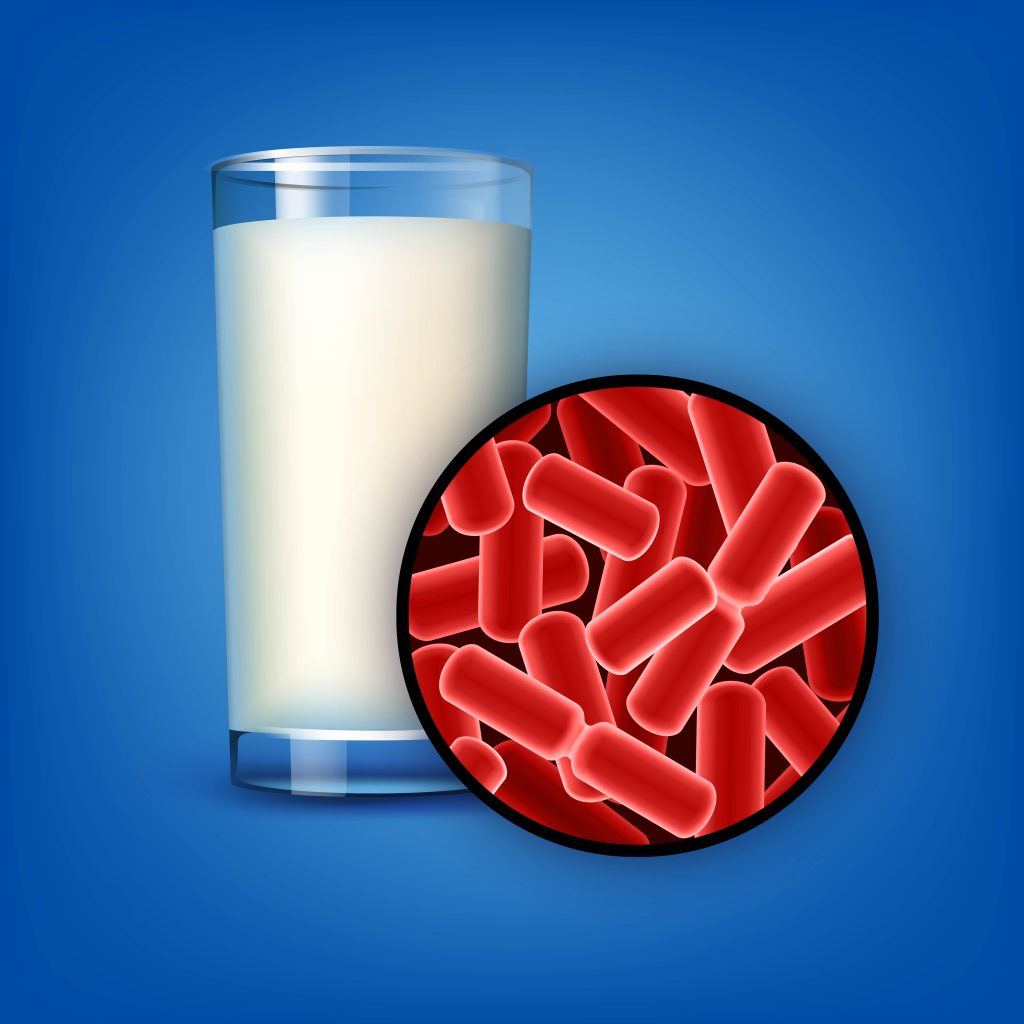
Image Credits: Freepik
Today, the reality of large-scale dairy production looks very different.
In many industrial systems, dairy production may involve:
- Hormones to increase milk yield
- Frequent antibiotic use to prevent infections in high-producing cattle
- Processed feed, like corn or soy, instead of natural grazing
- Ultra-processing techniques such as homogenization and high-temperature pasteurization
In countries like India, another concern often discussed is milk adulteration, where substances may be added to increase shelf life, volume, or appearance.All of this can change the biological quality of milk, which may affect how the body responds to it.In other words, the issue may not always be milk itself.Sometimes, it’s the kind of milk we are consuming today.This may also explain why some people experience milk intolerance or milk digestion problems with processed dairy products, but tolerate fresh, ethically sourced milk or fermented dairy much better.
When a Dairy Elimination Diet May Actually Help
There are situations where temporarily removing dairy can be helpful.Not as a lifelong rule, but as a diagnostic tool.In lifestyle and foundational medicine, practitioners sometimes use a short-term dairy elimination diet to observe how the body responds when a possible trigger is removed.This approach may help if someone is experiencing:
- Persistent bloating after dairy
- Frequent acne flare-ups
- Chronic sinus congestion or mucus
- Irritable bowel syndrome (IBS) or digestive discomfort
- Autoimmune flare-ups
- Unexplained gut inflammation
Typically, dairy is removed for about 4–6 weeks while other lifestyle habits are improved at the same time.And that part is important.Simply removing dairy without addressing the bigger picture rarely leads to long-term improvement.
Team Luke’s Approach: Remove, Repair, Restore
In our protocols, dairy elimination is usually part of a larger anti-inflammatory diet and lifestyle reset, not a permanent restriction.The process is simple:
- Remove potential triggers temporarily
Reducing foods that may aggravate symptoms, including dairy for some individuals, helps lower the inflammatory load.
- Repair gut health
Focus shifts to rebuilding the gut through whole foods, better sleep, stress management, and supporting the microbiome and digestion.
- Restore food tolerance
Once the gut improves, foods can be gradually reintroduced to see what the body tolerates.
Fix the System, Not Just the Food
This is the difference between symptom management and root-cause foundational medicine.True healing rarely comes from eliminating foods alone. It comes from improving the systems that regulate health, including:
- Gut microbiome diversity
- Sleep quality
- Stress management
- Nutrient-dense food
- Circadian rhythm alignment
- Regular movement
You can avoid dairy forever and still struggle with inflammation if the deeper foundations remain unaddressed.Which is why the real goal isn’t simply removing foods.It’s building a healthier gut and a more resilient body.

Image Credits: Freepik
So, Should You Drink Milk or Avoid It?
The real answer isn’t hidden in internet debates, trending reels, or rigid food rules.It lies in how your body responds.Good science and medicine shouldn’t force food on someone simply because it’s labelled “healthy.” At the same time, blindly eliminating foods without understanding the why isn’t the answer either.The smarter space lies somewhere in the middle: observe your body, understand your triggers, and make informed choices.Because health was never meant to be one-size-fits-all.Milk can absolutely be a Class A protein for people who can digest it… and if it’s pure.And given the state of food quality today, maybe the real luxury isn’t organic labels or fancy alternatives.Maybe the new wealth is simply owning your own cow!Disclaimer: This blog is for informational purposes only and is not a substitute for medical advice, diagnosis, or treatment. Always consult with your doctor, healthcare practitioner, or a certified nutrition expert before making changes to your nutrition, lifestyle, or supplement routine, especially if you have a medical condition or are on medication.
Struggling with milk or dairy intolerance or gut health issues?
We’re here to support YOU every step of the way.
Set up a one-on-one consultation with our foundational medicine team or enroll in our specialized Gut Care Program for personalized solutions.
Reach out to us at 1800 102 0253 or write to us at [email protected].