No products in the cart.
A natural intimate wash is any gentle, at-home cleansing rinse made from simple ingredients like rose water, apple cider vinegar, or calendula, designed to support hygiene without disrupting the vagina’s naturally acidic pH.
Most women only need plain water for daily cleansing. But when you want a little extra care during discomfort, sweat, or hormonal shifts, a well-made natural intimate wash can be a gentle option, as long as it’s used sparingly and correctly.
Feminine hygiene is one of the most misunderstood areas of women’s health.
Many women reach for harsh soaps, commercial intimate washes, or fragranced sprays, believing they’re keeping themselves cleaner. In reality, these products often do more harm than good. The vagina is a self-cleaning organ with its own built-in intelligence.
Much like the nose releases mucus or the skin sweats to cleanse itself, vaginal discharge is the body’s natural way of flushing out bacteria and debris.
That is why chemical-laden products, vaginal douching solutions, and heavily perfumed soaps can throw off this natural balance. A simple rinse with clean water is usually enough for most women, most days.
For those who want to go a step further, a natural vaginal wash made with safe, at-home ingredients can be a gentle addition, not a replacement, for the body’s own cleansing process.

Image Credits: Magnific
Understanding Vaginal pH and Why It Matters
The vagina maintains a delicate pH between 3.8 and 4.5, which is naturally acidic.
This acidity comes from Lactobacillus bacteria, the dominant species in a healthy vaginal microbiome, which produce lactic acid and antimicrobial compounds that keep the environment hostile to harmful bacteria, yeast, and infection-causing organisms.
- Research on the vaginal microenvironment describes this Lactobacillus-dominated ecosystem as the body’s first line of defense against bacterial vaginosis, aerobic vaginitis, and other microbial imbalances, with Lactobacilli and their antimicrobial and anti-inflammatory products, along with the vaginal epithelial mucosal barrier, forming an effective first line of defense against invading pathogens including bacterial vaginosis, vaginitis-associated bacteria, viruses, fungi, and protozoa.
- When this pH is disturbed, whether by soaps, synthetic vaginal washes, douching, or even antibiotics, it creates an opening for harmful bacteria to thrive.
- The result can be more frequent UTIs, yeast infections, irritation, or unusual discharge.
This is one reason major health bodies, including the CDC’s Office on Women’s Health, consistently advise against internal douching altogether; studies have linked the practice to a disrupted vaginal microbiome and a measurably higher pH, showing that intravaginal practices such as vaginal douching may inhibit or lower the colonization of beneficial Lactobacilli strains.
Maintaining this natural pH is key to supporting long-term vaginal health, which is exactly why anything used externally should respect and protect this acidic environment rather than disrupt it.
Signs your vaginal pH may be out of balance:
- A strong, unusual, or fishy odor
- Discharge that is unusually thick, watery, or discolored
- Persistent itching, burning, or irritation
- Recurring UTIs or discomfort during urination
- Dryness or soreness that doesn’t resolve on its own
If you notice several of these signs together, it’s worth checking in with a gynecologist rather than relying solely on home remedies.
Benefits of DIY Natural Intimate Washes
Using a natural intimate wash made at home with simple, gentle ingredients offers several practical benefits over commercial alternatives:
- Supports pH balance. Ingredients like rose water or a properly diluted apple cider vinegar feminine wash recipe (made with the mother culture) may help support the vagina’s natural acidity without overwhelming it, when used externally and infrequently.
- Avoids harsh chemicals. DIY washes are free of sulfates, parabens, synthetic fragrances, and dyes, which are common irritants in commercial intimate hygiene products.
- Offers antimicrobial and antifungal properties. Ingredients such as tea tree oil, neem, and calendula have documented antimicrobial activity in laboratory research. Tea tree oil (Melaleuca alternifolia), in particular, has been studied for its ability to inhibit the growth of Candida albicans and other pathogenic fungi in vitro, which is why it appears so often in natural skin and hygiene formulations. It’s worth noting most of this evidence comes from lab-based and animal studies rather than large human trials, so it should be treated as supportive, not curative.
- Soothes and calms irritation. Aloe vera, chamomile, and lavender are traditionally used for their anti-inflammatory properties and may help reduce redness, irritation, or itchiness, especially during hormonal shifts or after shaving.
- Is cost-effective and customizable. Making your own wash means knowing exactly what’s going into it, and adjusting ingredients based on your skin’s sensitivity or your body’s specific needs.
When made and used correctly, and used only externally, natural washes can support hygiene without interfering with the vagina’s own cleansing intelligence.
6 Natural Intimate Wash Recipes That Actually Work
Normal shower water is enough to maintain the right bacterial balance and keep you clean on most days. But if you want to take your hygiene routine a step further during periods of discomfort, sweat, or hormonal change, here are six DIY natural intimate wash recipes worth knowing. All of these are for external use only.
1. Apple Cider Vinegar (ACV) Sitz Bath
Why it works: Apple cider vinegar has natural antibacterial and antifungal properties that may help support pH balance, particularly during external irritation linked to vaginitis.
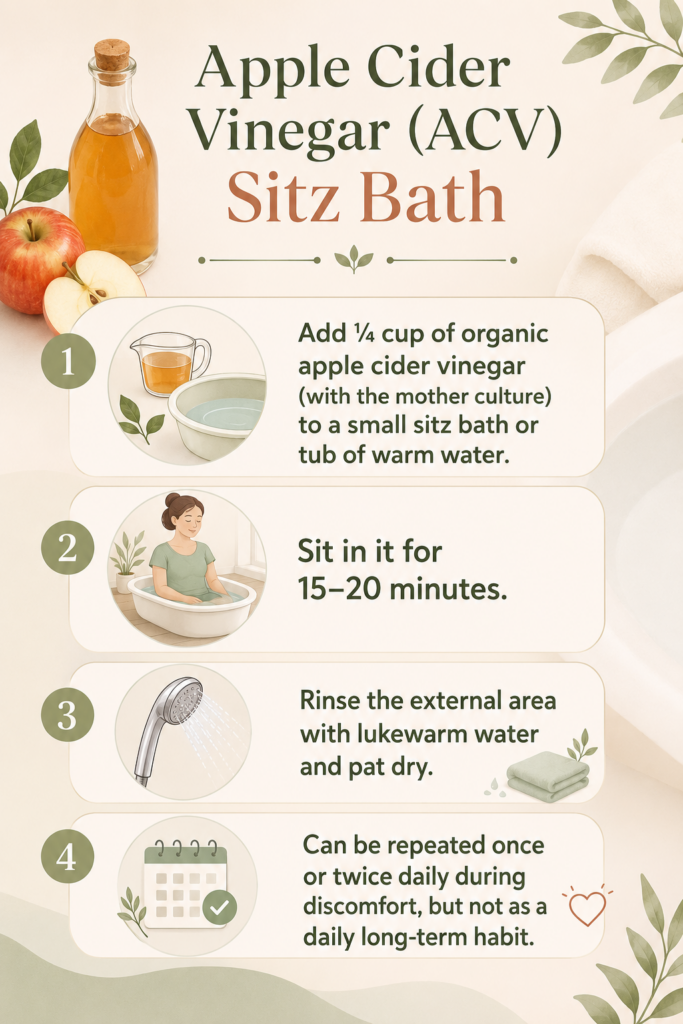
How to make it:
- Add ¼ cup of organic apple cider vinegar (with the mother culture) to a small sitz bath or tub of warm water
- Sit in it for 15–20 minutes
- Rinse the external area with lukewarm water and pat dry
- Can be repeated once or twice daily during discomfort, but not as a daily long-term habit
This is one of the most widely used apple cider vinegar feminine wash recipes, valued for supporting the skin’s recovery process externally.
2. Lemon Leaf and Tea Tree Oil Wash
Why it works: Lemon leaves offer mild antibacterial benefits, while tea tree oil is a well-studied antimicrobial that has shown activity against Candida and other fungal strains in laboratory settings.
How to make it:
- Boil 3–4 lemon leaves in 1 cup of water
- Let it steep for 30 minutes and cool completely
- Add 1–2 drops of tea tree oil once cooled
- Store in a clean glass bottle
This wash keeps for up to a month when refrigerated. Always dilute tea tree oil fully; it should never be applied undiluted to sensitive skin.
3. Baking Soda Sitz Bath
Why it works: Baking soda may help neutralize mild odor and soothe external irritation associated with yeast overgrowth.
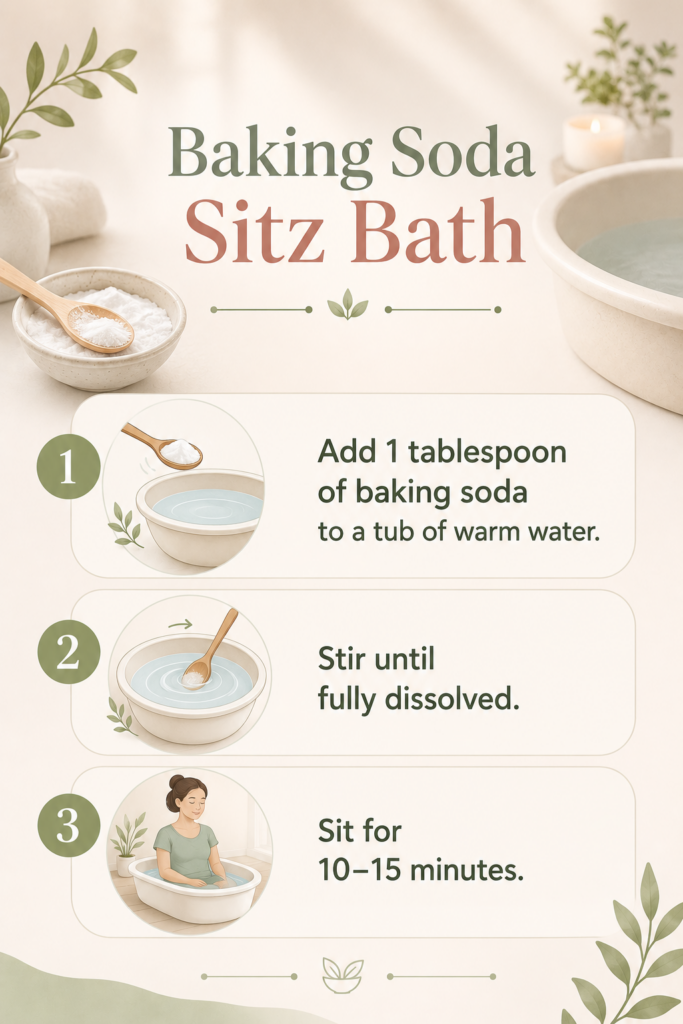
How to make it:
- Add 1 tablespoon of baking soda to a tub of warm water
- Stir until fully dissolved
- Sit for 10–15 minutes
Best reserved for occasional use during discomfort. Avoid daily use, as baking soda is alkaline and frequent exposure can disrupt the vagina’s natural acidity.
4. Rose Water and Lavender Oil Wash
Why it works: Rose water is traditionally used to cool and soothe sensitive skin, while lavender oil is valued for its calming, anti-inflammatory effect.
How to make it:
- Mix 1 cup water with 1/3 cup organic rose water, 3–4 drops of rosemary oil, and 3–4 drops of lavender oil
- Shake well and store in a glass container
- Use as a refreshing natural intimate wash
Lasts about a month when stored in a cool, dry place.
5. Calendula and Virgin Cold-Pressed Coconut Oil Wash
Why it works: Calendula is traditionally used for its wound-healing and anti-inflammatory qualities, while coconut oil has documented antimicrobial properties and is deeply moisturizing.
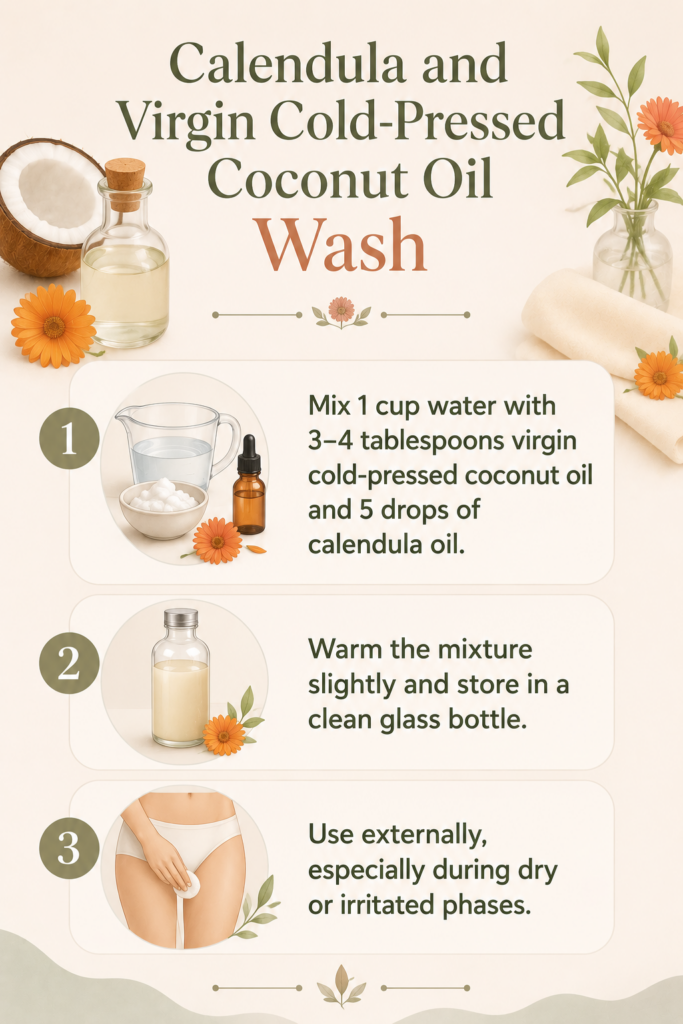
How to make it:
- Mix 1 cup water with 3–4 tablespoons virgin cold-pressed coconut oil and 5 drops of calendula oil
- Warm the mixture slightly and store in a clean glass bottle
- Use externally, especially during dry or irritated phases
Shelf life: 3–4 months when refrigerated.
6. Chamomile and Frankincense Oil Wash
Why it works: Chamomile is traditionally used to calm inflammation, while frankincense oil is associated with skin healing and reduced discomfort.
How to make it:
- Boil 1 chamomile tea bag in 1 cup of water and steep for 30 minutes
- Add 3 tablespoons almond oil and 4 drops of frankincense oil
- Mix well and store in a glass container
Use externally as needed. Stays fresh for up to a month, refrigerated.
Important note: Always use boiled and cooled water when making any natural intimate wash. Every recipe above is for external use only and should never be inserted inside the vagina, as internal use, even with natural ingredients, can disrupt the vaginal microbiome the same way commercial douches do.
When to Use a Natural Intimate Wash and When Not To
A natural vaginal wash is meant to be an occasional support, not a daily habit. Overuse, even with gentle, natural ingredients, can still throw off your vaginal flora the same way commercial products do.
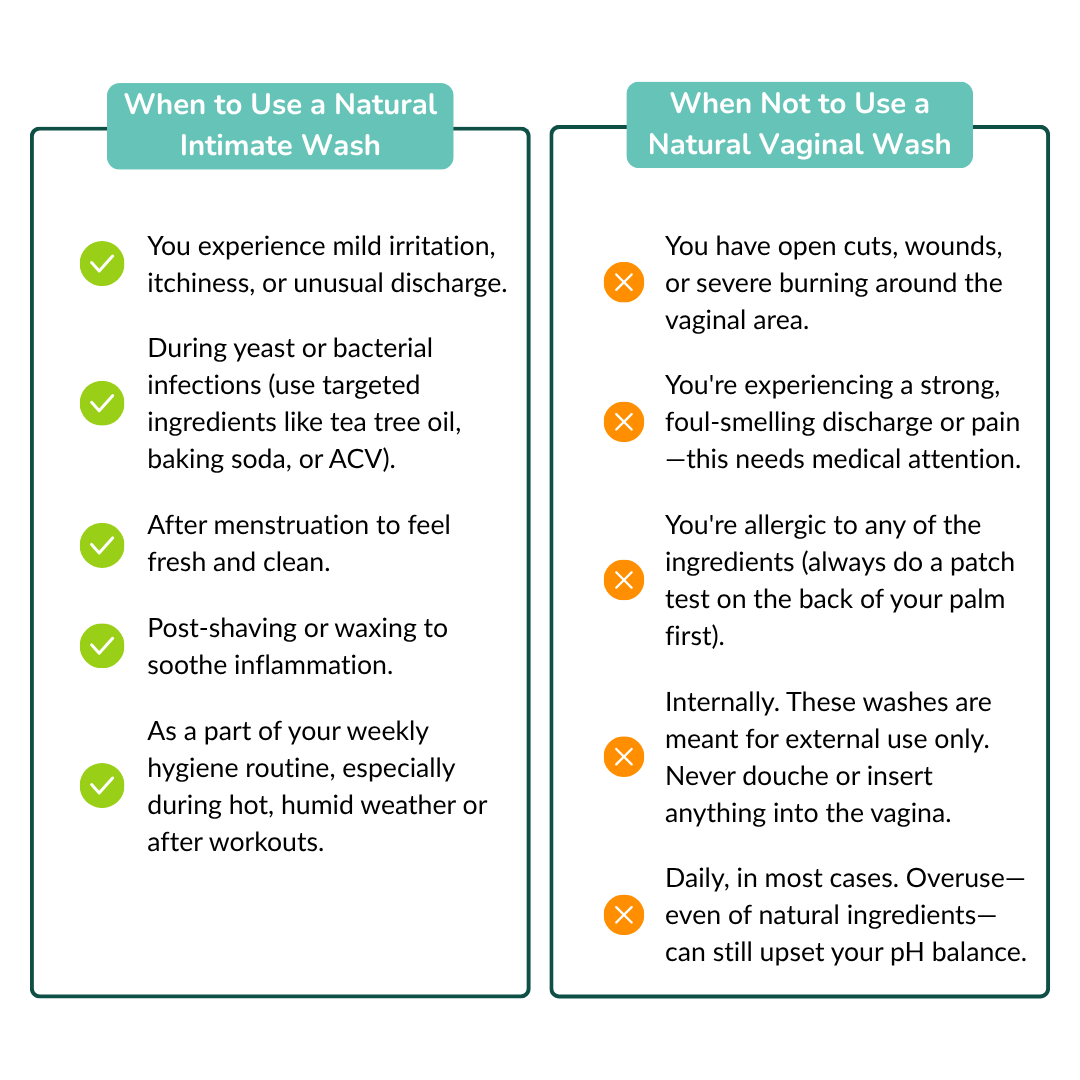
Home remedies can support comfort, but they are not a substitute for diagnosis or treatment when something is genuinely off.
If you’re looking for holistic, personalized support for hormonal and intimate health, explore our Hormonal Care Program guided by Luke’s team, which looks at hygiene, hormones, and lifestyle together rather than in isolation.
Common Mistakes to Avoid With Intimate Hygiene
Even well-intentioned hygiene habits can backfire. A few common mistakes worth correcting:
- Douching, even with “natural” ingredients. Research on vaginal douching consistently shows it disrupts the Lactobacillus-dominated microbiome and raises vaginal pH, regardless of whether the solution used is water, vinegar, or a commercial product.
- Using scented soaps, sprays, or wipes. These frequently contain fragrance compounds and preservatives that irritate the vulva and disrupt natural pH.
- Wearing damp or tight synthetic underwear for long periods. Yeast and bacteria thrive in warm, moist environments, so breathable cotton underwear and prompt changes after sweating or swimming matter more than most people realize.
- Over-washing, even externally. More is not better. Two to three times a week with a gentle wash, alongside daily water rinsing, is typically sufficient.
- Ignoring persistent symptoms. Home remedies can ease mild discomfort, but recurring infections, pain, or unusual discharge deserve a medical evaluation, not repeated self-treatment.
For more lifestyle-level guidance on maintaining this balance day to day, see Keeping Your Vagina Clean and Healthy.
Final Thoughts: Less Is More
Your vagina is self-cleaning and intelligent. It doesn’t need fancy soaps, artificial fragrances, or aggressive cleaning routines, and most of those do more harm than good. What it needs is support, not interference.
A natural intimate wash made with simple, safe ingredients can be a gentle way to maintain hygiene without disturbing your body’s natural pH. Ingredients like baking soda, neem, rose water, and tea tree oil, or a trusted apple cider vinegar feminine wash recipe, can help manage mild irritation or occasional discomfort when used externally and sparingly. They are not miracle cures, and they are not replacements for medical advice when something is clearly off.
Use a natural intimate wash mindfully, two to three times a week is usually enough. Over-washing, even with natural formulas, can still disrupt vaginal flora. Store your DIY washes in clean glass containers, preferably refrigerated, and always check for changes in smell, color, or texture before use.
If you’re experiencing persistent pain, unusual discharge, or a strong odor, treat that as a signal to consult a healthcare professional rather than relying solely on home remedies.
Your next step: Pick one recipe from this list that matches your current need, whether that’s post-workout freshness or period-week comfort, and try it for two weeks, no more than two to three times weekly. If irritation, odor, or discomfort doesn’t improve, that’s your cue to see a gynecologist rather than experiment further.

Image Credits: Magnific
Frequently Asked Questions
Can I use a natural intimate wash every day?
No. Even a natural intimate wash can disturb your vaginal pH if used too often. Two to three times a week is generally enough, unless you’re managing active discomfort.
Is a natural vaginal wash safe for sensitive skin?
Most natural washes are gentler than commercial products, but always patch-test a small amount first. If your skin reacts, stop use immediately.
Can I use these washes during my period?
Yes, though it isn’t necessary. The vagina naturally cleans itself during menstruation. If you want to feel fresher, rinse with plain water or a very diluted natural intimate wash.
Will a natural intimate wash treat infections like UTIs or yeast overgrowth?
These washes may help ease mild external symptoms, but they are not a cure. For ongoing or recurring infections, please see a doctor for proper diagnosis and treatment.
Can pregnant women use a natural intimate wash?
Some ingredients, including tea tree oil and other essential oils, should be avoided or used cautiously during pregnancy. Always consult your doctor before trying any new DIY wash while pregnant.
What’s the best time to use a natural vaginal wash?
After exercise, intercourse, your period, or when feeling itchy or uncomfortable. Avoid using any intimate wash immediately after shaving unless the ingredients are specifically soothing, like aloe or chamomile.
Do I need to refrigerate a homemade natural vaginal wash?
Yes, especially if it contains water and no preservatives. Store it in a clean glass bottle in the refrigerator, and check for any changes in smell, color, or texture before each use.
Can these washes be used internally?
No. A natural intimate wash is for external use only. The vagina cleans itself internally, and inserting any wash, even a natural one, can disrupt its microbiome the same way commercial douching does.
Disclaimer: The information provided in this article is for general educational purposes only and is not intended to replace professional medical advice, diagnosis, or treatment. Always consult your doctor or gynecologist before trying any new remedy, and discontinue use immediately if irritation occurs.
About the Author:

Team Luke | Luke Coutinho Holistic Healing Systems
For over 14 years, Luke Coutinho and Team Luke have worked with thousands of people across conditions, ages, and life stages. Team Luke is a collective of highly trained nutritionists, clinical dietitians, doctors, yoga and fitness experts, life coaches, and emotional counselors, all working under one philosophy and one standard of care.
At the heart of everything we do is Foundational Medicine, a science-backed framework built on six pillars: Food Science & Nutrient Synergy, Adequate Holistic Movement, Deep Sleep, Emotional Wellness & Mental Health, Nature (Your Internal & External Environment), and Spirit & Breathwork. Every piece of content published on this platform is rooted in that same belief: that the body thrives best when its foundations are strong. Our mission is simple and clear: to address root causes of illness and make wellness accessible, practical, and sustainable for all.
Connect with Team Luke:
Call: 1800 102 0253 | Email: [email protected]
Follow Luke:
Instagram: @luke_coutinho | Facebook: @LukeCoutinhoOfficial | X: @LukeCoutinho17 | YouTube: @LukeCoutinho | LinkedIn: Luke Coutinho