No products in the cart.
Has this ever happened to you?
You meet someone and something just doesn’t feel right. There is no obvious reason. Everyone around you reassures you, “You’re overthinking.” Yet a quiet discomfort stays.
Or your gut tells you not to say yes; to a job, a partnership, a decision, but logic or peer pressure pushes you to agree. Months later, things fall apart, and the same thought returns:
“I knew it… I felt it.”
Moments like these are universal. But they also leave us confused.
Was that intuition speaking?
Was it anxiety?
Or was the mind trying to justify something it already knew wasn’t right?
To make sense of this, we need to understand two psychological processes that often get mixed up: intuitive knowing and cognitive dissonance.
And once we understand them, we realize that clearer decision-making is not magic.

Image Credits: Freepik
What Is Really Happening? Intuition vs Cognitive Dissonance
Many decisions feel confusing because two systems are operating at the same time: subconscious biological intelligence and conscious reasoning.
Sometimes they agree. Sometimes they conflict.
Understanding this difference helps us avoid blaming ourselves for choices that didn’t work out, and helps us build better awareness going forward.
What Is Intuitive Feeling?
True intuitive feeling is subtle and calm.
People often describe it as:
- A quiet internal knowing
- A gentle sense of discomfort or ease
- A signal that appears without panic
- A body sensation — tightness in the stomach, heaviness, or surprising clarity
So scientifically speaking, what is gut feeling?
Research in neuroscience suggests that gut feeling is rapid subconscious pattern recognition. The brain continuously stores experiences, emotional memories, and environmental signals. When a similar situation appears, the brain detects patterns instantly, long before conscious reasoning begins.
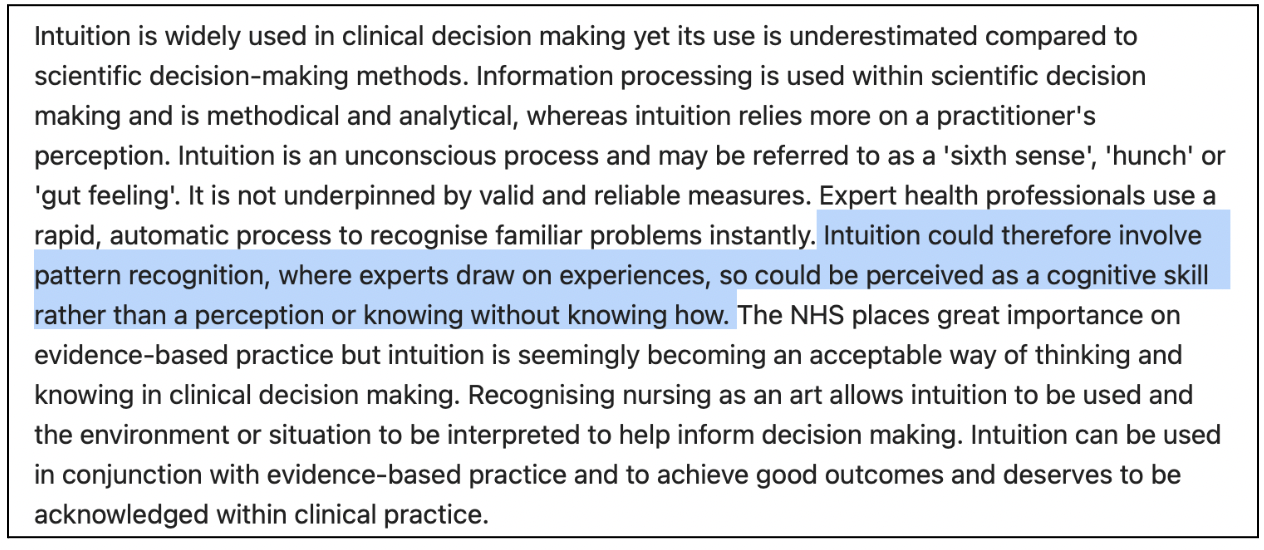
Source: Pearson H. Science and intuition: do both have a place in clinical decision making? Br J Nurs. 2013 Feb 28-Mar 13;22(4):212-5. doi: 10.12968/bjon.2013.22.4.212. PMID: 23448983.
Psychologist Gerd Gigerenzer’s work on intuitive intelligence explains that humans often make accurate decisions through subconscious processing that uses accumulated life experience without deliberate analysis.
Supporting this idea, the famous Iowa Gambling Task study by Bechara et al. (1997) showed that participants’ bodies displayed stress responses to risky choices before they consciously understood the danger. Their physiology ‘knew’ before their awareness did. This information travels through the autonomic nervous system and shows up as physical sensations we interpret as instinct or gut feeling.
Therefore, that ‘off’ feeling isn’t drama — it’s data.
Intuition is your brain and body recognizing patterns faster than your thinking mind can explain them. It is biological intelligence, not superstition.
Did You Know?Scientists have studied intuition in professional Japanese chess (Shogi) players and found something fascinating. Expert players could often predict their opponent’s moves before consciously analyzing the board. In a study published in Science (Chase & Simon, 1973), researchers discovered that advanced players didn’t calculate every possible move. Instead, their brains recognized patterns from thousands of prior games, allowing them to make split-second decisions that seemed ‘instinctive.’ This shows that intuition is learned, biological, and measurable, the brain (and body) is constantly integrating experience, memory, and context to guide decisions before conscious thought catches up. |

Image Credits: Freepik
What Is Cognitive Dissonance?
Now let’s contrast that with cognitive dissonance.
Coined by psychologist Leon Festinger in 1957, cognitive dissonance describes the mental discomfort that occurs when our actions conflict with our internal beliefs or signals.
Instead of changing behavior, we often try to justify it.
This typically appears as:
- Ignoring internal discomfort
- Creating logical reasons to stay in unhealthy situations
- Choosing social approval over personal truth
- Convincing ourselves that discomfort is normal
For example:
Your body signals exhaustion and dissatisfaction at work, but logic says the salary is good and the position is stable. You stay, pushing aside discomfort. Months later, burnout or emotional fatigue appears, and only then does the earlier signal make sense.
Here, intuition tried to warn you. Cognitive dissonance helps you silence it.
In short, the gut feeling warns but the cognitive dissonance rationalizes.
Intuition vs Cognitive Dissonance
| Intuition | Cognitive Dissonance |
| Calm internal knowing | Mental conflict |
| Quick clarity | Overthinking and justification |
| Body-based signals | Mental arguments |
| Quiet certainty | Loud confusion |
How Stress and Anxiety Blur the Difference
This confusion increases when stress levels are high.
Modern life exposes us to constant stimulation, performance pressure, and uncertainty. Chronic stress elevates cortisol levels, affecting brain areas responsible for emotional regulation and decision-making.
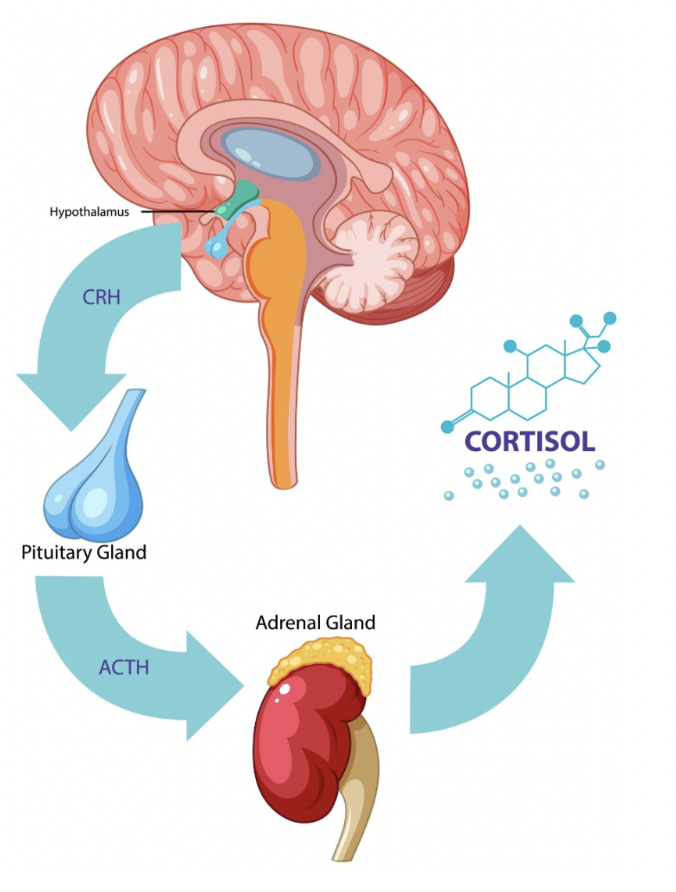
Image Credits: Freepik
This explains why anxiety often feels like intuition.
When stress becomes chronic:
- Fear signals get amplified
- Neutral situations appear threatening
- Internal clarity reduces
- Decision-making becomes reactive
This is why understanding the root cause of stress and the root cause for anxiety matters not just emotionally, but also for clearer judgment.
A calmer nervous system allows intuitive signals to emerge more clearly.
The Big Shift: Gut Feeling Is Measurable Biology
For decades, intuition was pushed into the category of instinct, superstition, or something mystical that could not be explained. People were told to rely only on logic and evidence, while gut feelings were dismissed as emotional noise.
Today, research clearly shows that what we casually call a gut feeling is not magic. It is biology in action, an intelligent communication system between the gut and the brain that constantly guides how we feel, respond, and make decisions.
And when we build a daily routine for a healthy life supported by a good habit for health, this becomes more reliable because our nervous system and digestion function in harmony.
Think of your body as an airport radar system.
The radar detects storms miles away before passengers even see clouds.
Your gut does the same.
It detects:
- Subtle emotional cues
- Micro facial expressions
- Stress signals
- Environmental threats
Before your thinking brain processes them.
Your intuition is radar.
Your conscious mind is the passenger.
Let us understand what is really happening inside the body.
The Gut-Brain Connection: A Two-Way Communication Highway
The gut brain connection refers to the continuous communication between the digestive system and the central nervous system (CNS). This exchange does not happen occasionally; it occurs every second, shaping mood, perception, and decision-making.
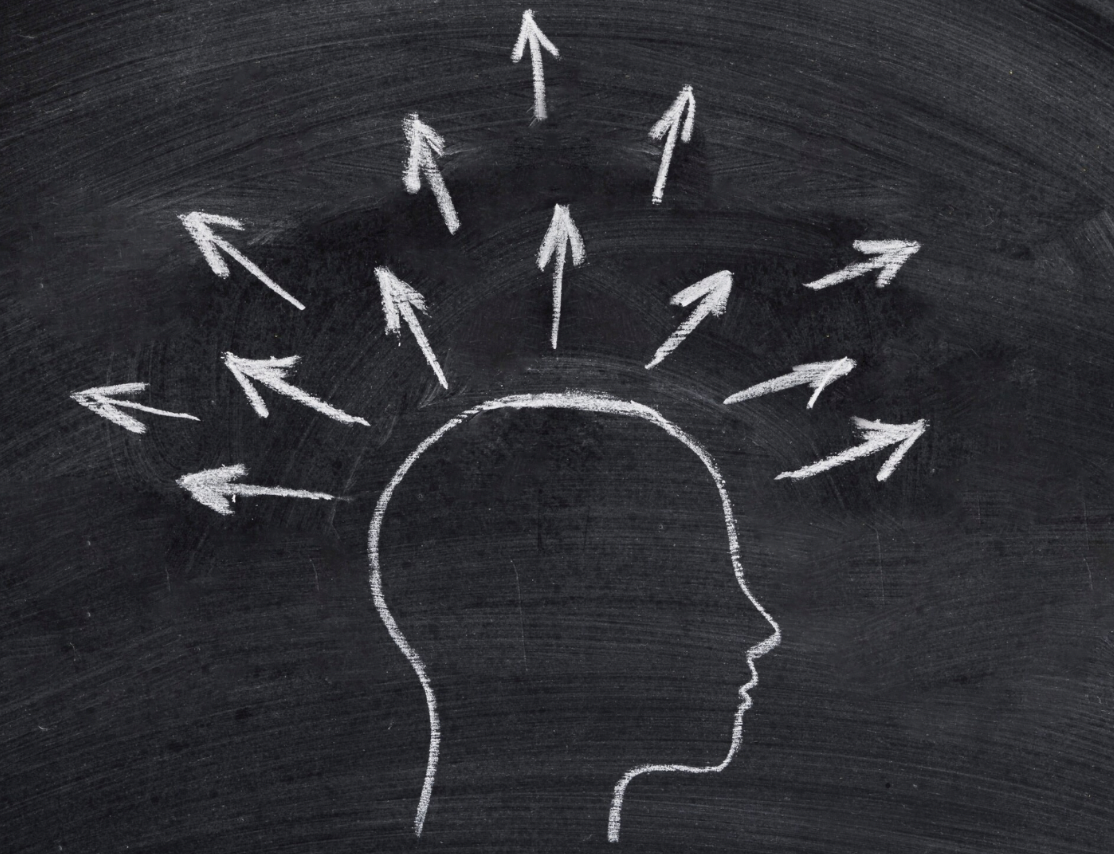
Image Credits: Freepik
Communication happens through multiple biological channels:
- The vagus nerve
- Hormonal signaling
- Immune system communication
- Microbial metabolites produced in the gut
Each of these pathways influences how we think, feel, and react. Let’s understand.
1. The Vagus Nerve: The Information Superhighway
The vagus nerve is one of the longest cranial nerves in the body, extending from the brainstem through the heart and lungs into the digestive organs.
Research by neurophysiologist Stephen Porges, through the Polyvagal Theory, explains how vagal signaling shapes emotional regulation and threat detection. When gut signals indicate safety, digestion and relaxation improve. When distress signals travel upward, the brain shifts into protective mode.
Studies published in Frontiers in psychiatry show that nearly 80–90% of vagus nerve fibers carry information from the gut upward to the brain, rather than the brain sending signals downward.
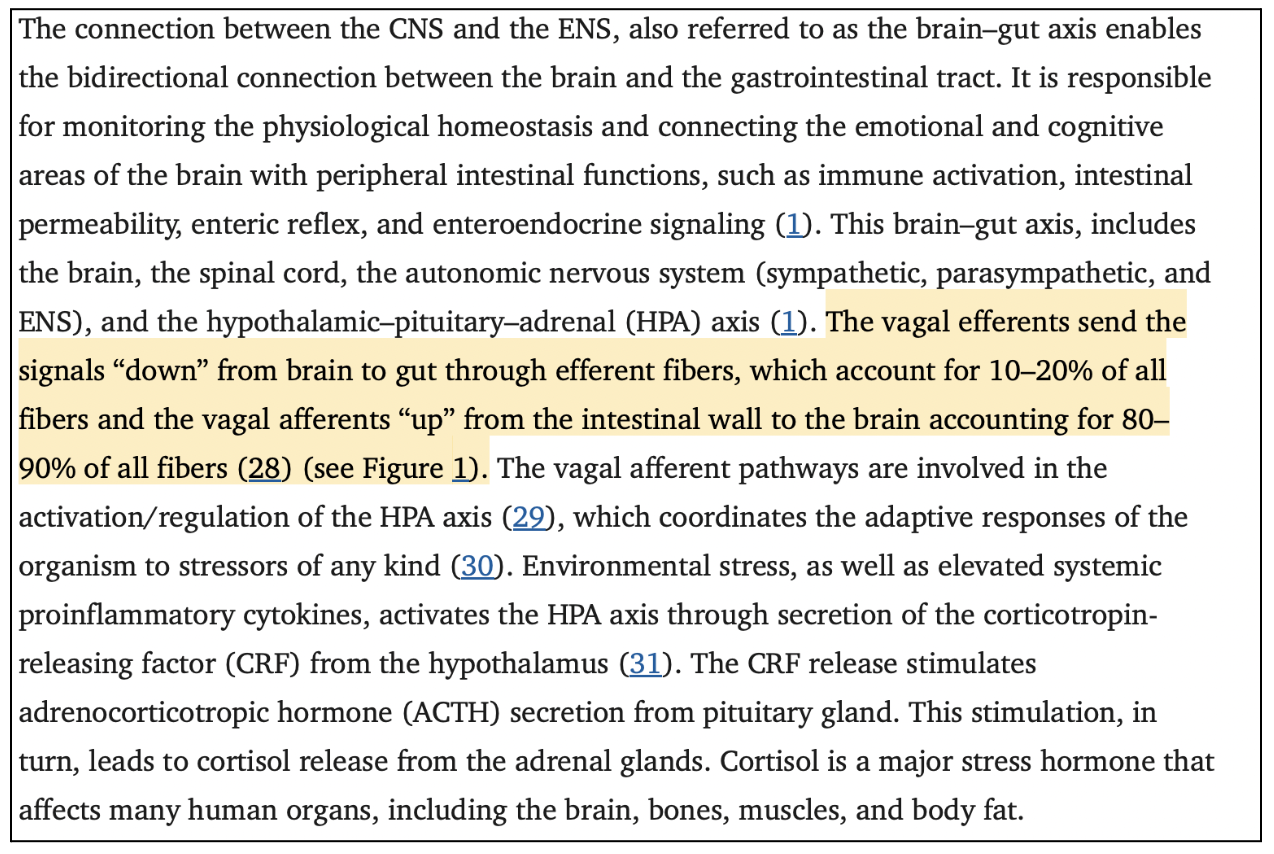
Source: Breit, S., Kupferberg, A., Rogler, G., & Hasler, G. (2018). Vagus Nerve as Modulator of the Brain-Gut Axis in Psychiatric and Inflammatory Disorders. Frontiers in psychiatry, 9, 44. https://doi.org/10.3389/fpsyt.2018.00044
This means the gut sends more information to the brain than the brain sends to the gut.
So when people say, “I felt it in my stomach,” it is not metaphorical. It is neurological.
2. Hormones and Immune Signals Also Shape Perception
The gut also acts as an endocrine organ, producing and regulating hormones that influence mood and cognition.
For example:
• Gut inflammation can alter mood regulation pathways
• Immune molecules released in the intestine influence brain activity
Gut inflammation and microbial imbalance correlate with anxiety and depressive symptoms, showing how digestive health shapes emotional responses.
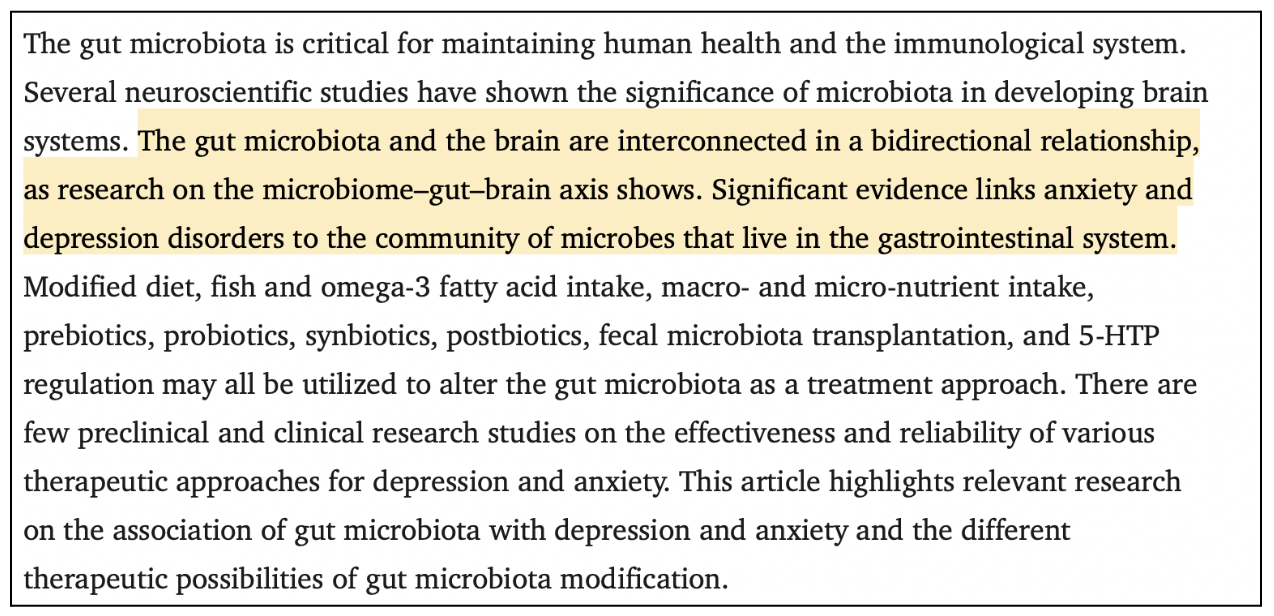
Source: Kumar, A., Pramanik, J., Goyal, N., Chauhan, D., Sivamaruthi, B. S., Prajapati, B. G., & Chaiyasut, C. (2023). Gut Microbiota in Anxiety and Depression: Unveiling the Relationships and Management Options. Pharmaceuticals (Basel, Switzerland), 16(4), 565. https://doi.org/10.3390/ph16040565
3. The Gut Microbiome: Ancient Intelligence Living Within Us
For a long time, bacteria were seen only as germs to eliminate. But modern science has completely changed this understanding. Today, researchers recognize that human health is deeply interconnected with trillions of microbes living inside us, especially in the digestive system.
This relationship is now studied under what scientists call the gut microbiome-brain axis, a communication system linking gut microbes with brain function and behavior.
Human life begins as a single fertilized cell, growing and developing with constant support from microbial communities that help digestion and immunity from early infancy.
Throughout life, these microbes help us extract nutrients, regulate defenses, and maintain internal balance.
And when life ends, microbes once again take part in the natural cycle, breaking down organic matter and returning nutrients to the ecosystem.
This is biological continuity.
Life sustains life through interconnected systems.
The microbes that support us are themselves sustained by the environments we live in and the food we consume.
Understanding this cycle reminds us that human health is never isolated; it is part of a larger ecological balance.
The Gut Microbiome-Brain Axis: Communication Beyond Digestion
The human gut contains an ecosystem of microorganisms, bacteria, viruses, fungi, and other microbes, collectively called the gut microbiome.
Research published in Nature Reviews Neuroscience by Cryan and Dinan (2012) established that gut microbes communicate with the brain through neural, immune, and metabolic pathways. Later studies in Cell and Nature Microbiology expanded on this, showing that microbial activity influences mood, cognition, and stress responses.
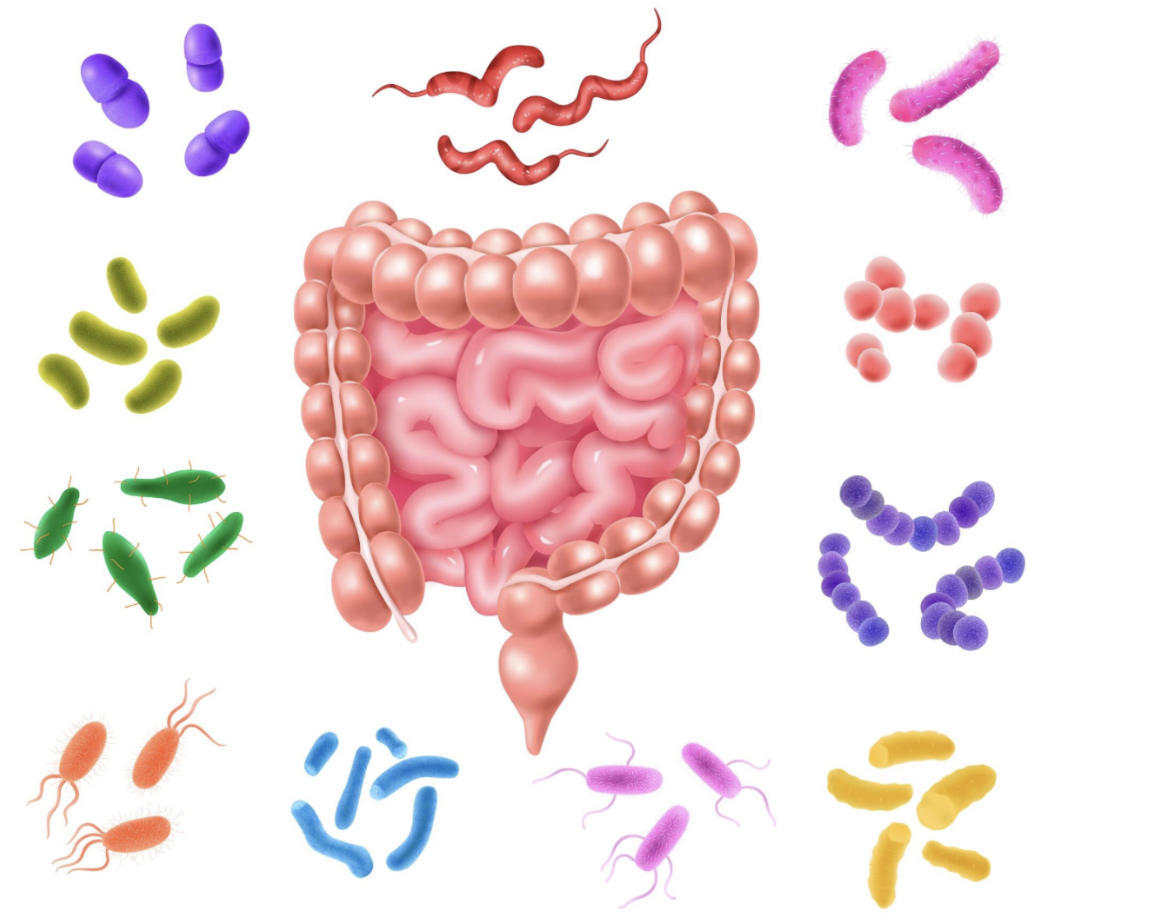
Image Credits: Freepik
This communication occurs through:
- Neural signaling via the vagus nerve
- Immune system activation and inflammation pathways
- Production of neurotransmitter precursors
- Microbial metabolites affecting brain function
What Do These Microbes Actually Do?
These microbes are not passive passengers. They actively support survival and wellbeing.
Their roles include:
- Breaking down complex fibers and nutrients that human enzymes alone cannot digest
- Training and regulating the immune system
- Producing short-chain fatty acids that protect gut lining and reduce inflammation
- Contributing to neurotransmitter production influencing mood
- Modulating stress responses and emotional processing
Microbial imbalance, called dysbiosis, is associated with conditions ranging from inflammatory bowel disorders to anxiety and depression.
This explains why gut disturbances often accompany mental stress.
Microbes and Mood
Certain gut bacteria influence neurotransmitters like serotonin and gamma-aminobutyric acid (GABA), which regulate emotional calmness and mood stability.
Animal studies by Bravo et al. (2011) published in Proceedings of the National Academy of Sciences (PNAS) demonstrated that altering gut bacteria changed emotional behavior in mice through vagus nerve signaling.
Human trials are now exploring how probiotics and changes in food habits affect anxiety and mood regulation, with early evidence suggesting promising connections.
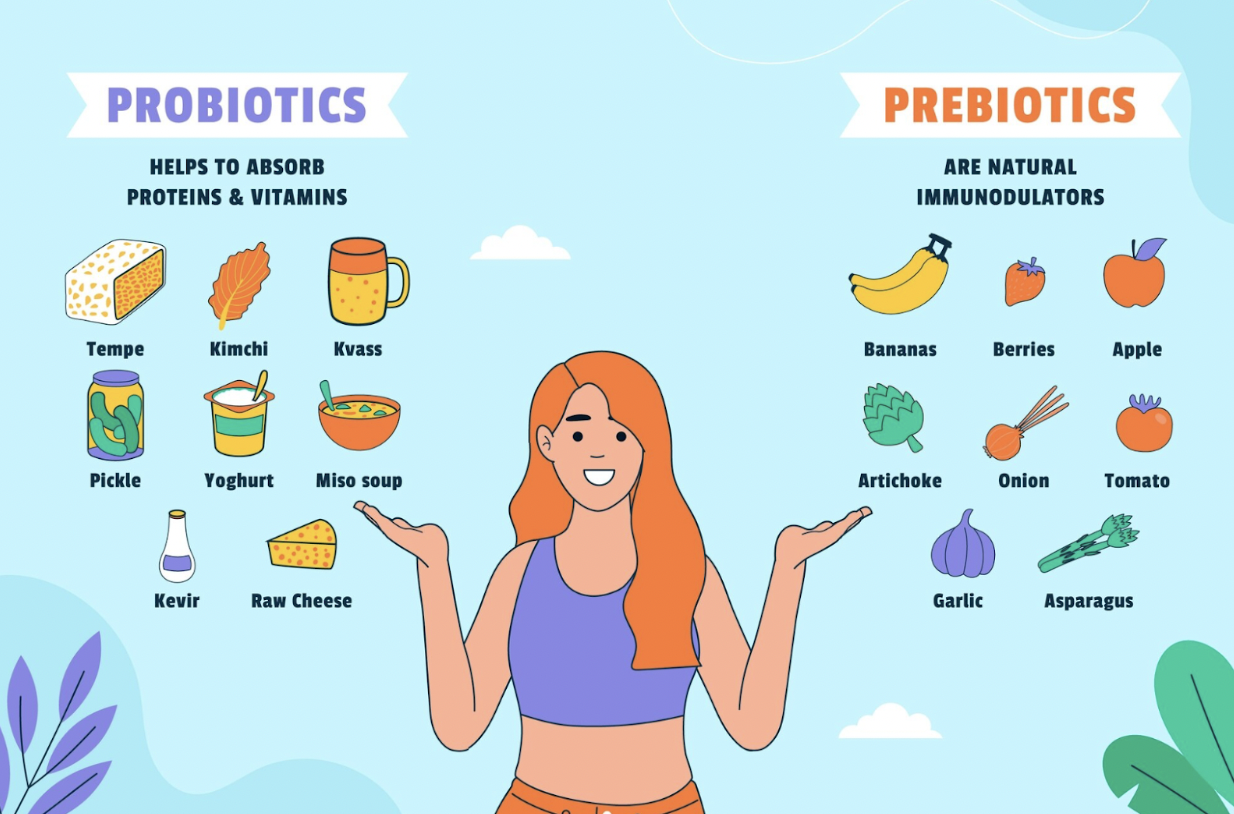
Image Credits: Freepik
Lifestyle Shapes Microbial Intelligence
Modern lifestyle patterns often weaken this ancient partnership.
Processed foods, chronic stress, sleep deprivation, and irregular eating patterns reduce microbial diversity. Reduced diversity is linked with metabolic disorders, inflammatory diseases, and emotional disturbances.
Simple practices that support microbial balance include:
- Eating fiber-rich plant foods regularly
- Including fermented foods where appropriate
- Maintaining consistent meal timing
- Ensuring restorative sleep
- Managing stress through breath and movement practices
- Breathing patterns also influence microbial and nervous system interactions. Nasal breathing improves oxygen exchange and supports autonomic nervous system regulation, with better stress control and improved sleep quality.
4. What Is the Enteric Nervous System?
The enteric nervous system (ENS) is a complex network of more than 100 million neurons embedded within the gastrointestinal tract. It functions independently while continuously communicating with the central nervous system.
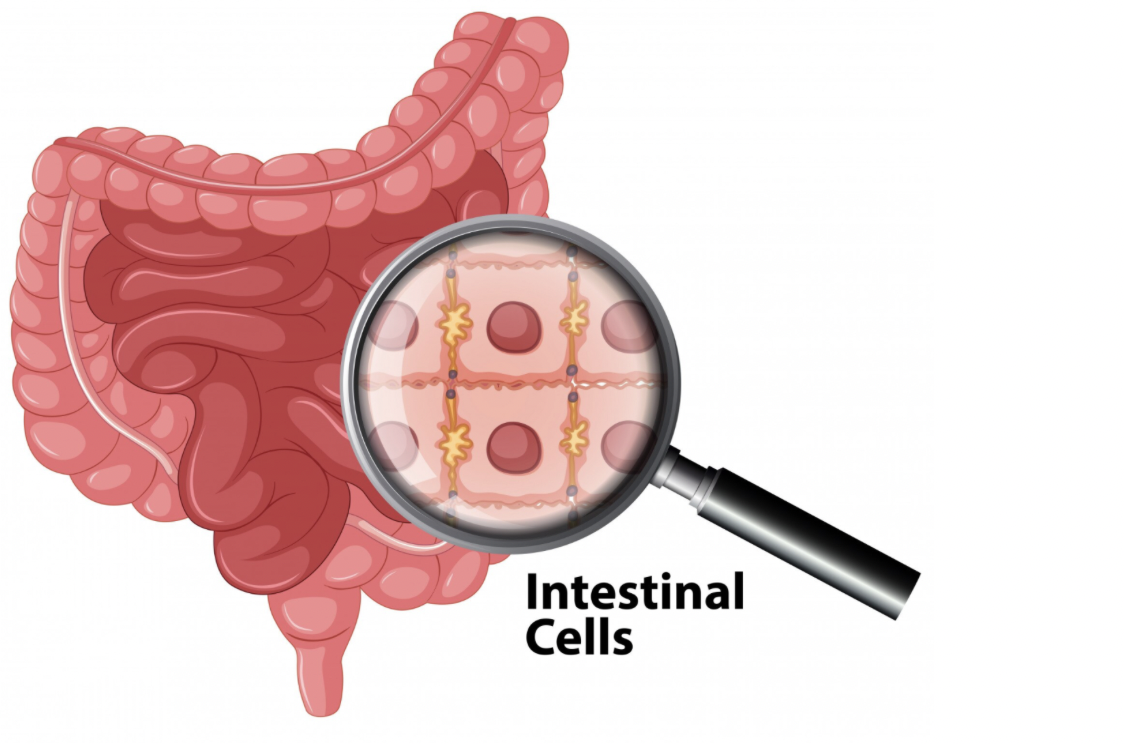
Image Credits: Freepik
Because of its complexity, scientists often refer to it as the body’s ‘second brain.’
The ENS performs critical tasks:
- Coordinates digestion and nutrient absorption
- Monitors chemical changes within the gut
- Influences immune responses
- Sends sensory information to the brain
- Affects mood and emotional processing
This autonomy explains why digestive discomfort, nausea, or tightening in the stomach often appear before conscious emotional awareness.
Your gut is not waiting for instructions from your brain. It is already analyzing internal and external information.
Why Gut Feeling Often Turns Out Right
Your gut feeling often turns out right not because of luck, but because your brain and body continuously analyze information long before conscious reasoning begins.
Your Brain Is Always Learning, Even When You Are Not Aware
Every experience you have, every conversation, mistake, success, disappointment, or achievement, gets recorded in neural circuits.
The brain continuously builds pattern libraries from:
- Past experiences
- Emotional memories
- Environmental observations
- Social interactions and behavioral cues
These patterns are stored across brain regions involved in emotion, reward processing, and threat detection, including the amygdala, hippocampus, and prefrontal cortex.
A landmark study by Antonio Damasio and colleagues introduced the Somatic Marker Hypothesis, suggesting that emotional experiences leave bodily markers that later guide decisions automatically. These somatic markers appear as physical sensations before conscious thought emerges.
In other words, the body remembers what the mind may forget.
Intuition Is Rapid Subconscious Pattern Matching
When you encounter a new situation, the brain instantly compares it to stored experiences.
This process occurs beneath conscious awareness.
Research from cognitive psychologist Gary Klein, who studied decision-making in firefighters and emergency responders, demonstrated that experts often make correct split-second decisions because their brains rapidly recognize patterns learned through repeated exposure.
They do not calculate outcomes step by step. They recognize situations instantly.
This same mechanism operates in everyday life.
Your nervous system constantly scans:
- Tone of voice
- Facial expressions
- Body language
- Environmental changes
- Emotional atmospheres
The Body Detects Safety or Danger First
Research in affective neuroscience shows that the amygdala, the brain’s threat-detection center, processes emotional cues milliseconds before the rational brain catches up. Emotional stimuli activate fear and safety circuits before conscious awareness forms.
This means:
The body reacts first.
The mind explains later.
This process evolved as a survival advantage. Early humans survived because their bodies detected threats before conscious analysis delayed action.
That survival intelligence still operates today.
However, modern life has different threats, emotional stress, social risks, unhealthy environments, and the same biological system evaluates them continuously.
Logic Is Slower. Biology Is Faster.
Conscious reasoning relies heavily on the prefrontal cortex, responsible for analysis, planning, and judgment. Logical thinking requires time, attention, and mental energy.
Subconscious processing, however, occurs across multiple brain regions simultaneously and does not require conscious attention.
Psychologist Daniel Kahneman describes this difference as:
- System 1 thinking — fast, automatic, intuitive
- System 2 thinking — slow, analytical, deliberate
Intuition belongs to the faster system. Logic belongs to the slower system.
Neither is wrong. They serve different purposes.

Image Credits: Freepik
But in situations requiring quick assessment of safety or compatibility, faster biological processing often guides us more efficiently.
Why Intuition Is Sometimes Mistaken
Balanced understanding is important.
Gut feeling is not supernatural wisdom. It is a biological prediction based on previous experience.
And predictions depend on the quality of stored experiences.
If someone has grown up in unstable environments, their nervous system may interpret neutral situations as threatening. Past trauma or chronic stress can distort intuitive signals.

Image Credits: Freepik
When Gut Feeling Is Wrong: Anxiety vs Intuition
An important part of understanding intuition is also knowing when not to trust it.
The challenge today is that many people live in chronic stress states. The nervous system remains alert for threats even when none exist. Over time, this blurs the line between genuine internal wisdom and fear-based reactions.
Why Anxiety Feels So Convincing
Anxiety is not imaginary. It is a physiological survival response.
Chronic anxiety exhibits heightened amygdala reactivity even to neutral stimuli. This leads to powerful physical sensations:
- Tight chest or stomach discomfort
- Rapid heartbeat
- Restlessness
- Mental urgency to escape or avoid
Because these sensations occur in the body, they are often mistaken for intuitive warning signals.
However, the source is different.
Anxiety is the nervous system reacting to perceived threat. Intuition is subconscious pattern recognition based on accumulated experience.
So How Do We Tell the Difference?
A simple observation can help.
Intuition tends to feel quiet and clear. Anxiety feels urgent and repetitive.
Intuition usually appears briefly and settles. Anxiety persists, creating loops of doubt and fear.
Recognizing these intuition signs becomes easier when we observe how the body and mind behave before and after decisions.
| Intuition | Anxiety |
| Calm clarity | Urgent fear |
| Quiet internal signal | Racing thoughts |
| Body relaxes after decision | Panic increases after decision |
| Short-lived awareness | Repetitive worry loops |
One key marker is what happens after the decision.
If choosing something brings calm, it likely reflects intuition. If fear continues even after deciding, anxiety is likely driving the reaction.
It’s time to break the loop of negative thoughts and reclaim clarity, calm, and control over your mind.
Begin your journey here
Serotonin and the Gut: Why Digestive Health Shapes Mood and Decision-Making
Most people think decisions are made only in the brain. But modern neuroscience and gastroenterology now show that clarity of thought is deeply connected to gut health.
In our practice, we often see individuals struggling with indecision, irritability, or anxiety while also experiencing bloating, irregular digestion, or food intolerance. These are not separate problems. They are connected through the gut–brain axis.
One of the most striking discoveries in recent decades is that nearly 90 percent of the body’s serotonin is produced in the gut, primarily by specialized enterochromaffin cells lining the intestines.
Serotonin produced in the gut plays a crucial role in:
- Regulating mood stability
- Supporting emotional resilience
- Influencing confidence and motivation
- Supporting clarity during decision-making
- Regulating gut motility and digestion
Balanced Serotonin Supports Mental Clarity
When gut health improves, emotional regulation often improves as well.
Healthy serotonin signaling supports:
- Calm mental states
- Emotional stability
- Increased confidence
- Improved focus
- Better intuitive and logical decisions
People frequently report clearer thinking, emotional steadiness, and better judgment once digestion stabilizes.
Exercises to Strengthen Gut–Brain Clarity
Vagus Nerve Reset Breathing
The vagus nerve connects the gut and brain, influencing digestion, mood, and emotional regulation.
Slow breathing activates vagal tone, shifting the body into a relaxation state.
Try this:
- Inhale gently through the nose for 4 seconds.
- Exhale slowly for 6 to 8 seconds.
- Repeat six rounds.
Image Credits: Freepik
Guided Meditation by Luke: Tap Into Your Intuition
In the noise of everyday life, we slowly lose touch with something deeply personal , our inner voice. The same quiet guidance that helped us move freely and fearlessly as children becomes harder to hear as responsibilities, opinions, comparisons, and constant information crowd our minds.
This guided meditation is designed to help you slow down, soften the mental chatter, and reconnect with your intuition, the wisdom already present within you.
Below are the steps you can follow to practice this meditation anytime you feel confused, emotionally overwhelmed, or unsure about your next step.
Step 1: Prepare Your Body and Space
- Sit or lie down in a comfortable position. Keep your spine comfortably straight but relaxed. If seated, rest your palms facing upward on your thighs.
- Gently close your eyes and allow your body to settle. Imagine a soft heaviness over your eyelids, allowing them to relax completely.
Step 2: Begin Conscious Breathing
- Take a slow inhale through your nose.
- Exhale gently through your mouth, allowing tension to leave the body.
- Repeat this breathing pattern two to three times, making each exhale longer than your inhale.
- Then transition to breathing slowly through the nose for both inhalation and exhalation, allowing your breath to flow naturally.
- Let your attention rest on your breathing rhythm.
Step 3: Allow Thoughts Without Resistance
- Thoughts will arise. Memories, plans, worries, distractions, all may appear.
- Do not fight them. Do not judge them.
- Each time you notice your mind wandering, gently guide your attention back to your breath.
- Meditation is not about stopping thoughts; it is about returning to stillness again and again.
Step 4: Ask the First Inner Question
- Silently ask yourself: “What do I need to know right now for my highest good?”
- Then simply sit in silence.
- Do not force answers. Let sensations, thoughts, or images arise naturally. Let external influences or opinions pass by without attachment.
- Listen quietly.
Step 5: Ask Where Change Is Needed
- Now ask: “Where in my life can I make changes that align me with my true purpose?”
- Again, remain silent.
- Answers may come as realizations about habits, relationships, behavior, or attitudes needing adjustment. Allow insights to surface gently.
Step 6: Remember What You’ve Forgotten
- Next, ask: “What have I forgotten about myself that my soul wants me to remember?”
- You may recall strengths, forgotten dreams, talents, innocence, or courage that life’s pressures have buried.
- Let these memories and realizations come without analysis.
Step 7: Discover How You Can Serve
- Ask deeply: “How can I serve the world through my unique expression?”
- Service doesn’t need to be grand. It may be kindness, listening, creativity, humor, or compassion.
- Every person has a gift. Let your intuition reveal yours.
Step 8: Sit in Silence and Listen
- Stay with your breath.
- Allow wisdom to emerge without effort.
- Understand that clarity may not come instantly. Intuition strengthens with repeated listening.
Step 9: Close Gently
- Take one final deep inhale and slow exhale.
- When ready, gently open your eyes or continue sitting quietly if you wish.
- Carry this calm awareness with you into your day.
If this practice stirred something within you, or if you feel ready to deepen your connection with your inner voice, take a few minutes to experience the full guided session by Luke.
Let yourself slow down, listen, and reconnect.
Watch the complete guided meditation here: Tap Into Your Intuition | A Guided Meditation by Luke
Biology Whispering Before Mind Speaks
Your intuition is not superstition.
It is your biology protecting you.
Long before logic arrives, your body already knows.
The goal is not blind trust, but learning to listen.
When mind and body align, decisions become clearer, calmer, wiser.
Sometimes the answers we chase outside were already quietly waiting inside.
Disclaimer: This blog is intended for educational and informational purposes only and is not a substitute for professional medical, psychological, or therapeutic advice, diagnosis, or treatment. The concepts shared here aim to enhance awareness about the mind–body connection and support informed lifestyle choices, but individual health conditions and responses vary. Always consult a qualified healthcare professional before making changes to your food habits, lifestyle, medication, mental health care, or wellness practices, especially if you have an existing medical or psychological condition. If you are experiencing severe stress, anxiety, depression, or any medical concern, please seek appropriate professional care promptly.
Want personalized guidance?
We help you find a way.
You can schedule a one-on-one consultation with our life coaches, or if you have gut issues, then explore our Gut Care Program and let us create a tailored plan that aligns with your unique needs.
Call us at 1800 102 0253 or write to us at [email protected].